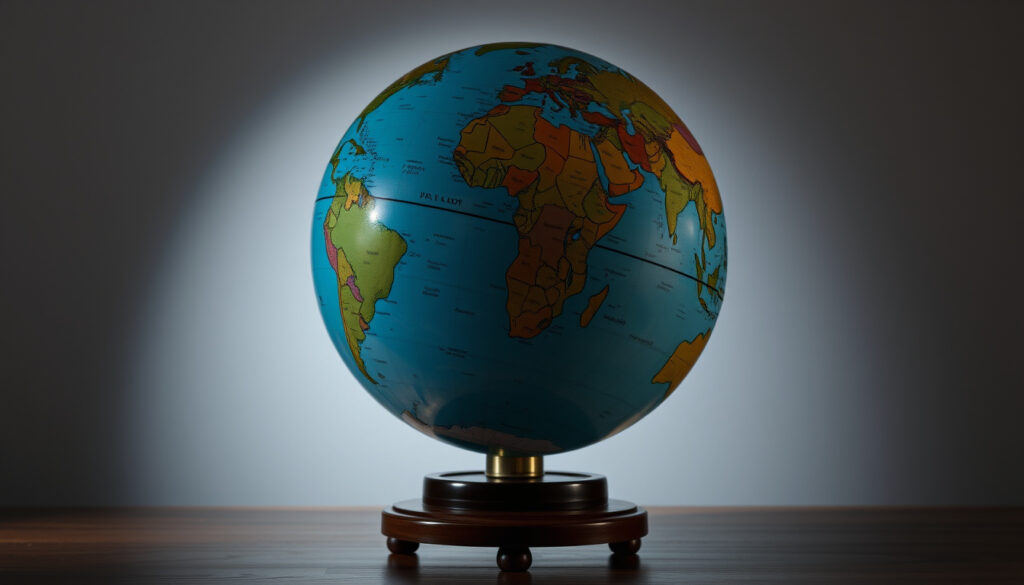
Countries of the World – Complete 2025 List and Key Facts
The world encompasses 195 recognized sovereign states as of 2025, comprising 193 United Nations member nations plus 2 observer states. These countries span six continents, home to a global population exceeding 8.1 billion people. Understanding how nations are defined, grouped, and ranked provides essential context for geography, international relations, and global demographics.
The United Nations serves as the primary framework for recognizing sovereign states, though disputes over territory and recognition continue to create complexity. Sources like Worldometer, the CIA World Factbook, and academic references provide varying counts depending on the criteria applied. This guide presents a comprehensive overview of all recognized countries, organized by population, area, and continental distribution.
How Many Countries Are There in the World?
The international community recognizes 195 sovereign states as of 2025. This total includes 193 member states of the United Nations, plus 2 non-member observer states: the Holy See (Vatican City) and the State of Palestine. The count excludes approximately 50 dependent territories such as Puerto Rico, Greenland, and Hong Kong, as well as partially recognized entities that do not meet full sovereign status criteria.
Key Insights on World Countries
- Population giants: India (1.46 billion) and China (1.42 billion) together account for approximately 35% of the world’s population, with Asia hosting about 60% of all humans.
- Largest territory: Russia spans 17.1 million km², making it the world’s largest country by area—nearly twice the size of Canada.
- Smallest nation: The Holy See (Vatican City) covers just 0.44 km² with 501 residents, while Nauru spans only 21 km² as the world’s smallest island republic.
- Fastest growing region: Africa represents the fastest-growing continent by population, with Nigeria emerging as the most populous African nation.
- Recognition complexities: Taiwan (23 million people) is considered a dependency of China by the United Nations, while Kosovo (~1.57 million) has partial recognition from approximately 100 UN members.
- Recent additions: South Sudan became the world’s youngest country in 2011, following independence from Sudan.
Snapshot Facts: Population and Area Leaders
| Metric | Top Country | Second Place | Third Place | Global Figure |
|---|---|---|---|---|
| Population | India (1.46B) | China (1.42B) | United States (347M) | 8.1B total |
| Area | Russia (17.1M km²) | Canada (10M km²) | United States (9.8M km²) | 148M km² land |
| Smallest Area | Holy See (0.44 km²) | Nauru (21 km²) | Tuvalu (26 km²) | — |
| Smallest Population | Holy See (501) | Tuvalu (9,492) | Nauru (12,025) | — |
Complete Alphabetical List of All Countries
The following table presents all 195 recognized sovereign states, ranked by 2025 population estimates. Each entry includes the capital city and total land area in square kilometers. Data is sourced primarily from Worldometer’s 2025 demographic projections, with cross-references to UN statistics and regional geographic surveys.
| Rank | Country | Capital | Population (2025) | Area (km²) | Continent |
|---|---|---|---|---|---|
| 1 | India | New Delhi | 1,463,865,525 | 3,287,263 | Asia |
| 2 | China | Beijing | 1,416,096,094 | 9,596,960 | Asia |
| 3 | United States | Washington, D.C. | 347,275,807 | 9,833,520 | Northern America |
| 4 | Indonesia | Jakarta | 285,721,236 | 1,904,569 | Asia |
| 5 | Pakistan | Islamabad | 255,219,554 | 881,913 | Asia |
| 6 | Nigeria | Abuja | 237,527,782 | 923,768 | Africa |
| 7 | Brazil | Brasília | 212,812,405 | 8,515,767 | Latin America |
| 8 | Bangladesh | Dhaka | 175,686,899 | 147,570 | Asia |
| 9 | Russia | Moscow | 143,997,393 | 17,098,242 | Europe/Asia |
| 10 | Mexico | Mexico City | 132,709,512 | 1,964,375 | Latin America |
| 19 | Germany | Berlin | 84,075,075 | 357,022 | Europe |
| 20 | Thailand | Bangkok | 71,619,863 | 513,120 | Asia |
| 22 | United Kingdom | London | 69,551,332 | 242,495 | Europe |
| 37 | Yemen | Sana’a | 41,773,878 | 527,968 | Asia |
| 40 | Ukraine | Kyiv | 38,980,376 | 603,550 | Europe |
| 89 | Papua New Guinea | Port Moresby | 10,762,817 | 462,840 | Oceania |
| 95 | Togo | Lomé | 9,721,608 | 56,785 | Africa |
| 152 | Timor-Leste | Dili | 1,418,517 | 14,874 | Asia |
| 193 | Nauru | Yaren | 12,025 | 21 | Oceania |
| 194 | Tuvalu | Funafuti | 9,492 | 26 | Oceania |
| 195 | Holy See (Vatican) | Vatican City | 501 | 0.44 | Europe |
Population figures vary slightly between sources due to different estimation methodologies and update frequencies. Worldometer provides the most current 2025 projections, while UN data may reflect earlier estimates. Some figures—particularly for Ukraine—show notable discrepancies due to ongoing conflict affecting population movement and census challenges.
Countries by Continent and Region
The 195 sovereign states distribute unevenly across six inhabited continents, each with distinct demographic and geographic characteristics. Regional organizations and geographic conventions sometimes classify countries differently—for example, Russia spans both Europe and Asia, while Türkiye straddles both continents.
Africa: 54 Countries
Africa contains 54 recognized sovereign states, the largest number of any continent. The continent hosts approximately 1.5 billion people, representing about 18% of the global population. Africa’s 54 countries include large nations like Nigeria (population 238 million) and very small island states like Seychelles. The continent experiences the world’s fastest population growth, with many nations undergoing rapid demographic expansion.
Asia: 48 Countries
Asia encompasses 48 recognized countries and holds roughly 60% of the world’s population—making it the most populous continent by a significant margin. The region includes both the world’s most populous nations (India, China) and smallest states (Maldives, Singapore). Asia’s 48 countries span from the Middle East through South Asia, Southeast Asia, and East Asia, with enormous variation in culture, language, and development.
Europe: 44 Countries
Europe comprises 44 sovereign states, including transcontinental nations like Russia and Türkiye that span into Asia. The continent represents approximately 9% of the world’s population despite being relatively small in area. Europe’s 44 countries range from massive Russia to microstates like Monaco (2 km²), Liechtenstein (160 km²), and San Marino (61 km²).
Latin America and Caribbean: 33 Countries
Latin America and the Caribbean include 33 recognized sovereign states, home to approximately 8% of the global population. Brazil dominates the region as both the largest country by area (8.5 million km²) and population (213 million). The region encompasses mainland nations spanning from Mexico through Central and South America, plus numerous Caribbean island states.
Northern America: 23 Countries (Including Dependencies)
Northern America contains 3 sovereign countries—the United States, Canada, and Denmark (through Greenland)—plus approximately 20 dependent territories. The region represents about 5% of world population. Excluding dependencies, only the United States and Canada rank as fully recognized sovereign states among the continent’s three UN members.
Oceania: 14 Countries
Oceania encompasses 14 recognized sovereign states spread across the Pacific Ocean. The region includes the large landmasses of Australia and New Zealand alongside numerous small island nations. Population distribution varies dramatically, from Australia (27 million) to tiny Tuvalu (9,492 residents). Several Pacific island states face existential challenges from rising sea levels.
The number of countries per continent varies by source depending on how transcontinental nations are classified. Russia typically counts as European for political and cultural reasons despite having more territory in Asia. The Worldometer database provides consistent continental assignments used by many reference sources.
Top Countries by Population and Area
Comparing countries by demographic size and territorial extent reveals stark contrasts between the world’s largest and smallest nations. Population rankings shift gradually as birth rates, death rates, and migration patterns evolve, while area rankings remain fixed unless border changes occur.
Most Populous Countries in 2025
India and China together comprise over 35% of humanity, with combined populations exceeding 2.8 billion people. India’s population surpassed China’s in 2023 and continues growing, while China’s population has begun declining slightly. The United States ranks a distant third at 347 million, followed by Indonesia (286 million) and Pakistan (255 million). Nigeria, now the most populous nation in Africa, ranks sixth globally at 238 million and is projected to become the third-largest country by population before 2050.
Largest Countries by Land Area
Russia’s 17.1 million square kilometers make it nearly twice the size of Canada, the second-largest nation at 10 million km². The United States (9.8 million km²) and China (9.6 million km²) round out the top four, with China notably having a smaller land area than the United States despite its vastly larger population. The top 10 largest countries by area include: Russia, Canada, United States, China, Brazil, Australia, India, Argentina, Kazakhstan, and Algeria.
Smallest Nations by Population and Area
The Holy See (Vatican City) represents the world’s smallest both by population (501 residents) and area (0.44 km²). Tuvalu and Nauru follow as the second and third smallest nations, each with populations under 13,000. These microstates often rely on international agreements, tourism, or specialized economic activities for survival. Several Caribbean and Pacific island nations face particular vulnerability to climate change and natural disasters.
Some population figures remain disputed or estimated due to census difficulties, conflict, or limited government capacity. Ukraine’s population estimates range from 36.7 million to 39 million depending on methodology and territorial control assumptions. Readers should consult current sources like Britannica for the most recent verified statistics.
Disputed or Partially Recognized Countries
The question of which entities qualify as sovereign countries involves ongoing disputes and varying interpretations. International recognition, UN membership, and de facto independence do not always align, creating categories of partially recognized or disputed states.
Taiwan
Taiwan (population ~23 million) operates as a self-governing democracy with its own government, military, and currency. However, the People’s Republic of China claims Taiwan as part of its territory and opposes international recognition of Taiwanese sovereignty. Only approximately 12 UN member states maintain formal diplomatic relations with Taiwan, while most nations recognize the One China policy. The United Nations itself considers Taiwan a province of China, excluding it from the count of 195 sovereign states.
Kosovo
Kosovo declared independence from Serbia in 2008 and has achieved recognition from approximately 100 UN member states, including the United States and most European Union members. However, Serbia, Russia, China, and approximately 90 other UN members do not recognize Kosovo’s independence. Without UN Security Council recognition, Kosovo cannot become a UN member state despite its declared sovereignty and functioning government.
Other Partially Recognized Territories
Several other territories maintain varying degrees of recognition or de facto independence. South Ossetia and Abkhazia (in Georgia) are recognized only by Russia and a few allies. Northern Cyprus is recognized only by Turkey. Western Sahara remains in dispute between Morocco and the Sahrawi Arab Democratic Republic. These entities fall outside the 195 recognized sovereign states due to insufficient international recognition.
Historical Timeline of Country Formations
The number of countries in the world has increased dramatically over the past century, particularly during three major periods of decolonization and geopolitical upheaval. Understanding this historical context helps explain the current distribution of 195 sovereign states.
- 1945: The United Nations is founded with 51 member states, representing nations that emerged from World War II with various levels of sovereignty and colonial status.
- 1950s–1960s: Massive decolonization wave creates dozens of new African and Asian nations, with 17 African countries gaining independence in 1960 alone (“Year of Africa”).
- 1970s: Bangladesh emerges from conflict with Pakistan in 1971. Caribbean and Pacific island nations achieve independence from colonial powers.
- 1990–1991: The Soviet Union dissolves into 15 independent states (1991), followed by Yugoslavia’s breakup into seven nations, adding over 20 new countries to the global count.
- 2006: Montenegro and Serbia separate, creating two distinct UN member states from the former Yugoslav republic.
- 2011: South Sudan gains independence from Sudan, becoming the world’s youngest recognized sovereign state and bringing the total to 195.
- 2020s–present: No new UN member states have been admitted, though recognition debates regarding Kosovo and other territories continue.
Recognized vs. Disputed Countries
Fully Recognized Countries
195 sovereign states with broad international recognition:
- 193 UN member states
- 2 UN observer states (Holy See, Palestine)
- Recognized by majority of UN members
- Full diplomatic relations worldwide
- Included in standard international databases
Disputed or Partially Recognized
Entities with contested sovereign status:
- Taiwan: Claimed by China, recognized by ~12 nations
- Kosovo: Recognized by ~100 nations, blocked from UN
- South Ossetia, Abkhazia: Recognized by few states
- Northern Cyprus: Turkish-only recognition
- Western Sahara: Contested status
Context and Analysis
The international system for recognizing sovereign states rests on the 1933 Montevideo Convention, which established four criteria: a permanent population, a defined territory, a government, and capacity to enter into relations with other states. However, political considerations often override these legal criteria, as demonstrated by the Taiwan and Kosovo cases.
The trend toward creating new sovereign states has slowed considerably since South Sudan’s independence in 2011. No new UN member states have emerged in the 2020s, suggesting that major geopolitical restructuring may be complete for now. However, unresolved disputes in places like Kosovo, Western Sahara, and Taiwan ensure that debates about sovereign recognition will continue.
Regional organizations like the European Union, African Union, and Arab League play increasingly important roles in international affairs, sometimes rivaling the significance of sovereign state membership. Economic integration, climate agreements, and global health initiatives often operate through these regional frameworks rather than purely through nation-state diplomacy.
Sources and Expert Quotes
Comprehensive country data draws from multiple authoritative sources that employ different methodologies and update frequencies. The United Nations Department of Economic and Social Affairs provides official population estimates and demographic projections through its World Population Prospects database. The CIA World Factbook offers detailed country profiles including geographic, economic, and governmental data maintained by the United States intelligence community.
“The distribution of the world’s population remains highly uneven, with Asia accounting for approximately 60 percent of the global total as of 2025.”
— Worldometers Geography Division, 2025 World Population Statistics
For continental breakdowns and regional analysis, Statista aggregates demographic data from UN sources and national statistical offices. Geographic boundaries and country areas are cross-referenced against Science Focus and World Atlas to ensure consistency.
“The question of how many countries exist in the world depends significantly on what criteria are used for recognition and which sources are consulted.”
— Political Geography Reference Standards, Nations Online Project
Summary: Key Facts About Countries of the World
The world comprises 195 recognized sovereign states as of 2025, including 193 UN member nations plus 2 observer states. These countries span 6 continents, with Asia and Africa hosting the largest number of nations. The global population exceeds 8.1 billion, concentrated heavily in Asia (60%), followed by Africa (18%), Europe (9%), Latin America (8%), Northern America (5%), and Oceania (less than 1%).
Population leadership belongs to India (1.46 billion) and China (1.42 billion), while Russia dominates by land area (17.1 million km²). The smallest nations—the Holy See (0.44 km²), Tuvalu (26 km²), and Nauru (21 km²)—illustrate the vast differences in national scale. Recognition disputes involving Taiwan, Kosovo, and other territories highlight that sovereignty involves both legal criteria and political reality. For more demographic insights, explore related guides on Spain and global population trends.
Frequently Asked Questions
How many countries are there in the world?
There are 195 recognized sovereign states as of 2025, comprising 193 UN member states plus 2 observer states (Holy See/Vatican City and Palestine). This count excludes partially recognized territories and dependencies.
Which country has the largest population?
India holds the title of world’s most populous nation with approximately 1.46 billion people as of 2025, having surpassed China in 2023. China follows with 1.42 billion, and the United States ranks third with 347 million.
What is the largest country by area?
Russia is the world’s largest country by land area, spanning approximately 17.1 million square kilometers. Canada ranks second at 10 million km², followed by the United States at 9.8 million km² and China at 9.6 million km².
How many countries are in each continent?
The distribution varies: Africa has 54 countries, Asia has 48, Europe has 44, Latin America/Caribbean has 33, Oceania has 14, and Northern America has 3 sovereign nations (excluding dependencies). These numbers can vary by source depending on how transcontinental countries are classified.
How many countries are in the United Nations?
The United Nations has 193 member states. Additionally, 2 non-member observer states hold UN recognition: the Holy See (Vatican City) and the State of Palestine.
Is Taiwan a recognized country?
Taiwan is not universally recognized as a sovereign state. China claims Taiwan as part of its territory, and only approximately 12 UN member states maintain diplomatic relations with Taipei. The United Nations considers Taiwan a province of China.
What is the smallest country in the world?
The Holy See (Vatican City) is the world’s smallest country by both area (0.44 km²) and population (501 residents). Tuvalu (26 km², 9,492 people) and Nauru (21 km², 12,025 people) rank as the next smallest nations.
How are countries ranked by GDP?
GDP rankings differ from population rankings. The United States has the world’s largest GDP, followed by China and Japan. However, GDP per capita rankings look very different, with small wealthy nations like Luxembourg, Qatar, and Ireland often ranking highest.
More related posts
 WASPI Compensation Latest News Today: Rejection Update
 Acrylic Nails vs Gel: Which Is Better for Your Nails
 Ashley Cole: Biography, Net Worth, Wife, Height, and Career Stats
 Cameron Diaz’s Children, Age, Net Worth & Why She Quit Acting
 Jessica Ennis: Biography, Family, Net Worth, Current Activities
 Women’s Cardigan Ireland: Where to Buy, Prices & Stores
 Beetle Juice: Film, Entertainer, and Medication Explained
 Jimmy Kimmel Suspension: Joke, Backlash, Aniston’s Defense
