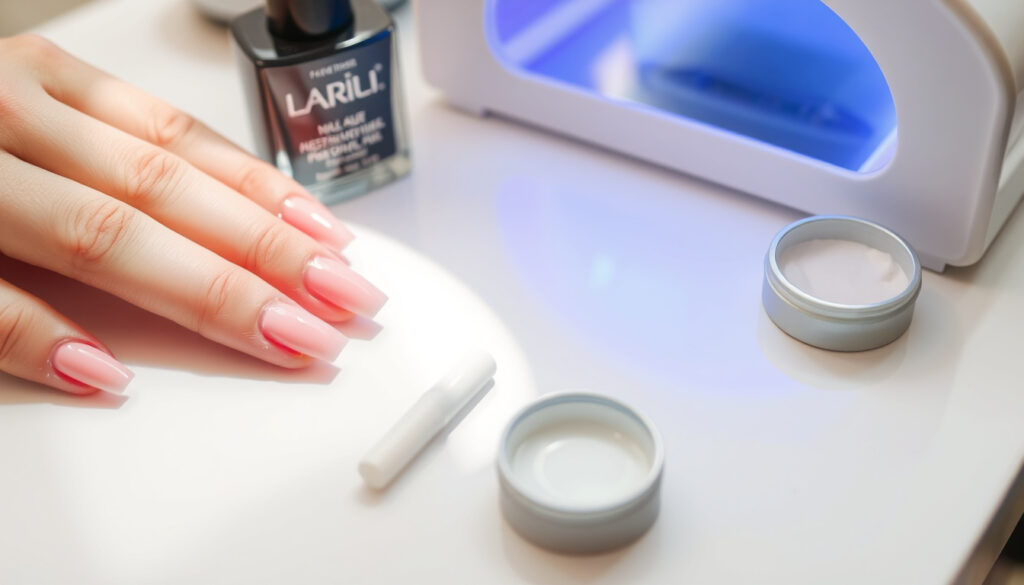
Acrylic Nails vs Gel: Which Is Better for Your Nails
Anyone who’s sat in a salon chair staring at a wall of color swatches has asked the same question: acrylic or gel? The choice between these two popular nail extensions can feel like a gamble on your natural nails.
Market share (acrylic + gel): Over 60% of salon nail extensions · Acrylic wear time: 2–3 weeks before fill required · Gel wear time: 2–3 weeks before fill required · Acrylic curing: Chemical reaction (no UV lamp) · Gel curing: UV/LED lamp required · Removal time: Acrylic 15–20 min soak; Gel 10–15 min soak
Quick snapshot
- Acrylics are harder and less flexible than gel (American Academy of Dermatology)
- Both require proper removal to avoid nail damage (American Academy of Dermatology)
- Methacrylates are common allergens in both systems (PubMed Central dermatology review)
- Long-term impact of repeated UV exposure from gel curing (Cleveland Clinic)
- Relative nail strength recovery time after acrylic vs gel removal (Cleveland Clinic)
- Incidence rates of infection with each system (Herome)
- Whether technician skill or product type matters more for nail health (Cleveland Clinic)
- 1950s — First acrylic nail system developed by dental prosthetics company (PubMed Central)
- 1980s — UV-cured gel nails introduced (Cleveland Clinic)
- 2020s — HEMA-free and MMA-free formulas increase (PubMed Central)
- Growing shift toward hypoallergenic formulas (PubMed Central 2024 review)
- More salons adopting monomer-free dip powder systems (PubMed Central 2024 review)
- Increased consumer awareness of removal techniques (Dr. M. Bernstein blog)
Here is a snapshot of key data across both systems.
| Attribute | Value |
|---|---|
| Acrylic application time | 45–90 minutes |
| Gel application time | 30–60 minutes |
| Acrylic typical cost per set | $35–$70 |
| Gel typical cost per set | $30–$60 |
| Common allergen in acrylics | Ethyl methacrylate (EMA) (PubMed Central review) |
| Common allergen in gels | Methacrylate oligomers |
| UV exposure from gel curing | Low – similar to 2 minutes of sunlight per session (Cleveland Clinic dermatology) |
Which Is Better: Gel or Acrylic Nails?
Key differences in application
- Acrylics require a liquid monomer and powder mix that cures through a chemical reaction — no lamp needed.
- Gel nails are applied as a polish and cured under a UV or LED lamp in seconds to minutes.
- Acrylics can be shaped before curing, giving the technician more working time; gel sets fast once under the lamp.
Acrylics give the technician more sculpting control but expose the client to stronger monomer fumes. Gel eliminates odor but ties the technician to a lamp’s cure cycle.
Durability comparison
Five facts, one pattern: acrylic is rigid, gel is flexible. Acrylics are generally more durable and less likely to crack under impact, which is why they’re preferred for longer extensions (Glitterbels US). Gel nails, being more flexible, resist chipping but can peel if layers are applied incorrectly.
The implication for wearers is a direct trade-off: if you need structural reinforcement for long nail shapes, acrylic wins on strength. If you want a lighter feel that moves with the natural nail, gel performs better.
Aesthetic differences
- Gel nails offer a more natural, glossier finish — often described as “wet look.”
- Acrylics can appear thicker unless carefully shaped and buffed.
- Both can be painted with regular polish or gel topcoat.
That glossy gel finish comes with a trade-off: the UV exposure needed to cure it, while low per session, adds up over years of monthly appointments.
The pattern: gel wins on aesthetics and feel; acrylic wins on raw durability and shape holding. Neither is objectively “better” — your choice depends on which dimension matters more to your daily life.
What Are the Negatives of Acrylic Nails?
Damage to natural nails
- Acrylics require filing the natural nail surface rough so the product can stick, which thins the natural nail plate.
- Improper removal can strip the nail plate completely (Dermatology Advisor).
- A 2024 dermatology review lists acrylic nails as a cause of onychodystrophy, onycholysis, and paronychia (PubMed Central).
Chemical odor and fumes
Acrylic monomers have a strong, characteristic odor that some find unpleasant. The AAD notes that methacrylate monomers in acrylics can cause contact dermatitis in sensitive individuals. The 2024 PubMed Central review identifies allergic contact dermatitis as the most prevalent adverse event from DIY nail cosmetics, tied directly to (meth)acrylates in nail glue, gel polish, and acrylic systems (PubMed Central).
Maintenance and removal challenges
- Acrylics require fills every 2–3 weeks as the natural nail grows out.
- Removal involves soaking in acetone for 15–20 minutes, followed by gentle scraping.
- Aggressive filing during removal can shave away fragments of the nail plate.
The trade-off: acrylics last longer between fills than many alternatives, but the removal process carries a higher mechanical damage risk because the product is harder than gel.
Do Acrylics Damage Your Nails More Than Gel?
Mechanisms of damage for acrylics
- Acrylics require aggressive filing of the natural nail for adhesion, thinning the nail plate.
- They are non-breathable and trap moisture, creating conditions favorable for onychomycosis.
- Removal requires more force because acrylic is harder than gel.
Mechanisms of damage for gel
- Gel nails can still cause brittleness, peeling, and cracking.
- Improper removal — picking or peeling off gel — can peel away layers of the nail plate.
- Acetone used for gel removal dries out the nail and surrounding skin.
Which is safer for long-term wear?
“Choose soak-off gel nails instead of acrylic nails if you want to reduce nail cracking, because gel nails are more flexible.”
Both systems cause damage if over-filed or improperly removed. Gel is generally easier to remove with less mechanical damage, but improper removal of gel (picking instead of soaking) can be equally destructive. Most nail damage occurs during the removal process, according to a 2025 patient-education article (Dr. M. Bernstein blog).
The product type matters less than the removal method. A client who soaks off gel properly may have healthier nails than someone who lets a salon aggressively file off acrylics.
The pattern: both damage nails, but the mechanism differs. Acrylics cause more damage during application and removal filing; gels cause damage through improper at-home removal and UV exposure uncertainty.
What Is the Healthiest Fake Nail Option?
Comparing acrylic, gel, and dip powder
Here is how the three systems compare on main factors.
| Attribute | Acrylic | Gel | Dip Powder |
|---|---|---|---|
| Application | Liquid monomer + powder | Polish cured under UV/LED | Adhesive + colored powder |
| Durability | High – rigid and strong (Glitterbels US) | Medium – flexible, prone to peeling | High – similar to acrylic |
| Odor | Strong monomer fumes | Minimal odor | Low odor |
| UV exposure | None | Low every session | None |
| Removal difficulty | Soak 15–20 min + filing | Soak 10–15 min | Soak 15–20 min |
Considerations for sensitive nails
For weaker or damaged nails, the AAD specifically recommends soak-off gel over acrylic. Dip powder systems may reduce exposure to liquid monomers and are often less odorous, but cross-contamination risk exists if powders are shared between clients.
Salon vs at-home application
A 2024 dermatology review found allergic contact dermatitis is most prevalent from DIY nail cosmetics (PubMed Central). Professional application by a skilled technician minimizes damage regardless of product choice.
The pattern: no artificial nail is “healthy” — all alter the nail plate. The healthiest option is the one applied by a skilled technician using proper hygiene, with the gentlest removal method available.
What Is the Healthiest Nail Option at a Salon?
Professional grade vs consumer products
A skilled technician minimizes damage regardless of product, according to the American Academy of Dermatology. Gel overlays on natural nails — rather than full extensions — are less invasive because they require less filing of the natural plate.
Role of the nail technician
- A trained technician knows not to over-file the natural nail.
- Proper application avoids lifting, which traps moisture and bacteria.
- Technicians certified in infection control reduce the risk of paronychia (PubMed Central).
Pre-treatment and aftercare
Regular breaks of 2–4 weeks between sets allow the nail plate to recover. Hydrating cuticle oils and non-acetone removers help maintain the nail barrier’s integrity. The AAD recommends taking a break from artificial nails if the natural nails show signs of brittleness or peeling.
Any salon that files the natural nail aggressively before application should raise a red flag. The healthiest salon choice is the one that leaves your natural plate thickest.
“Prolonged wear of false nails can create an environment favorable for onychomycosis.”
The healthiest salon choice is the one that leaves your natural plate thickest.
Confirmed facts vs what’s still unclear
Confirmed facts
- Acrylics are harder and less flexible than gel
- Both systems require proper removal to avoid nail damage
- Methacrylates are common contact allergens in both (PubMed Central 2024 review)
What’s unclear
- Long-term impact of repeated UV exposure from gel curing
- Relative nail strength recovery time after acrylic vs gel removal
- Incidence rates of infection with each system
- Whether technician skill or product type matters more for nail health
“Gel nail polish contains acrylates and methacrylates, which can trigger allergic reactions including contact dermatitis.”
— Cleveland Clinic (dermatology department)
“Removal of gels and acrylics can peel or shave away fragments of the nail plate and damage keratin layers.”
— Dermatology Advisor (clinical dermatology news)
The key insight: the debate between acrylic and gel often misses the real variable — the person applying and removing them. The health of your natural nails after wearing extensions depends more on technician skill and removal method than on which product you pick.
thebeautyacademy.org, youtube.com, reddit.com, reddit.com, beamnailbar.com, buzzdistrict.org
Frequently asked questions
How often should I take a break from acrylic nails?
The American Academy of Dermatology recommends taking a break if your natural nails show signs of brittleness, thinning, or peeling. A 2–4 week break every few months allows the nail plate to recover.
Can I apply acrylic nails myself at home?
Yes, but the 2024 dermatology review found allergic contact dermatitis is most prevalent from DIY nail cosmetics (PubMed Central). Professional training is recommended to avoid over-filing and improper monomer ratios.
Is it safe to wear acrylic nails continuously?
Prolonged wear can create an environment favorable for fungal infections, according to Dermatology Advisor. Continuous wear without breaks increases the risk of onychodystrophy and permanent nail thinning.
What is the difference between gel and acrylic nail remover?
Both require acetone-based removal. Acrylics need a 15–20 minute soak; gels need 10–15 minutes. The difference is that acrylic is harder and may require more filing before soaking. Acetone can dry out the nail and surrounding skin.
Do gel nails need a UV lamp?
Yes, gel polish requires a UV or LED lamp to cure. The exposure per session is low — similar to 2 minutes of sunlight — but cumulative exposure over years is still under study.
How can I prevent nail damage from acrylics?
Choose a skilled technician who does not over-file the natural nail. Use cuticle oil daily, take regular breaks, and never pick or peel off acrylics — always have them professionally soaked off.
Are dip powder nails healthier than acrylics?
Dip powder systems eliminate liquid monomer exposure and require no UV lamp, which reduces two key risk factors: monomer allergy and UV exposure. However, cross-contamination risks exist if powders are shared between clients (PubMed Central).
More related posts
 Maggie Smith Death 2024: Cause of Death, Tributes, and Legacy
 Midland Metropolitan University Hospital – Location, Services and Key Facts
 Nikolaj Coster-Waldau: Career, Languages, Family, Latest Work
 Cast of Dexter: New Blood – Full Actors List & Characters
 Signs of Cervical Cancer: Early Warnings and Symptoms
 Tommee Tippee Blackout Blind – Guide, Reviews and Tips
 Shah Rukh Khan: Net Worth, Religion, Wives & Verified Facts
 Vanessa Redgrave: Health, Family, Career, and Where She Lives Now
