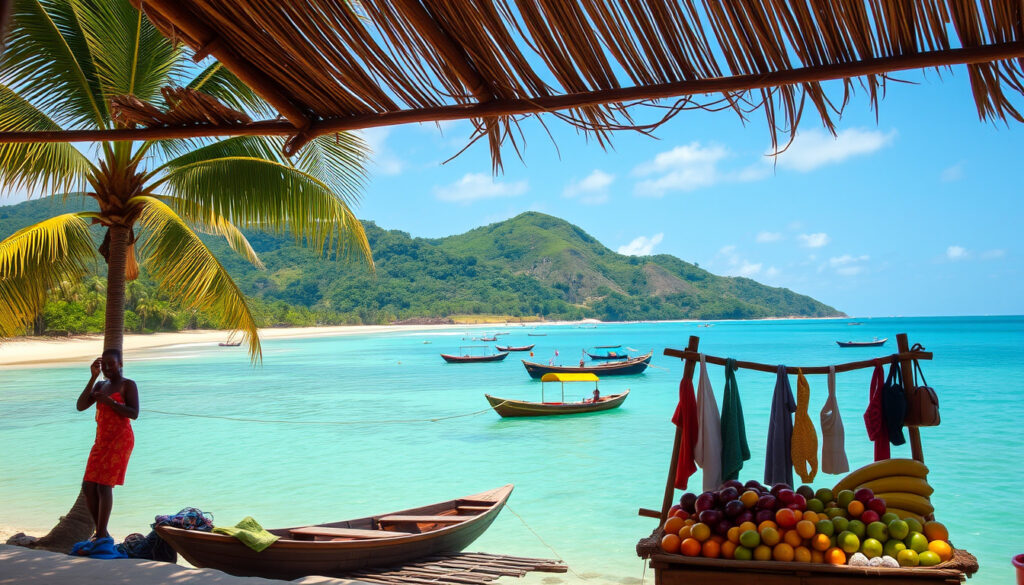
Sierra Leone Travel Guide: Safety, Culture, Economy & Facts
Sierra Leone greets you with a warmth that demands a proper “Kushe,” yet its streets carry serious safety warnings from half a dozen governments. This guide brings together official travel advisories, on-the-ground cultural norms, and the economic realities that define life in one of the world’s most misunderstood countries, giving you what you need to make an informed decision about visiting or simply understanding this fascinating place.
Population (2023): 8.6 million ·
Capital: Freetown ·
Official language: English ·
Currency: Sierra Leonean leone (SLL) ·
GDP per capita (2022): $475 ·
Life expectancy: 60.4 years
Quick snapshot
- Official language is English (Government of Canada Travel Advice)
- Same-sex relations between men are illegal (UK Foreign Travel Advice)
- Violent crime occurs frequently in Freetown (U.S. State Department Travel Advisory)
- Exact crime rates in specific neighbourhoods outside Freetown
- Reliability of tourism infrastructure in rural areas
- Current quality of internet connectivity across regions
- Political situation improved after civil war ended in 2002 (UK Foreign Travel Advice)
- Protests can still turn violent despite overall improvement (UK Foreign Travel Advice)
- Infrastructure improvements ongoing but slow
- Tourism sector gradually developing with community-based initiatives
Six key facts in one view, revealing the gap between Sierra Leone’s warm reputation and its hard infrastructure reality.
| Attribute | Value |
|---|---|
| Official Name | Republic of Sierra Leone |
| Capital | Freetown |
| Population (2023) | 8.6 million |
| Official Language | English |
| Currency | Sierra Leonean leone (SLL) |
| GDP per capita (2022) | $475 |
| Life Expectancy | 60.4 years |
Is it safe to travel to Sierra Leone now?
Every major Western government advises increased caution. The U.S. State Department (Level 2 advisory) warns that violent crime — including robbery and assault — occurs frequently in Freetown, and specifically advises against traveling outside the Freetown peninsula after nightfall. Canada’s travel advisory echoes this, recommending a high degree of caution due to crime.
The Australian government’s Smartraveller service (high degree of caution) explicitly cites risk of violent crime and civil unrest that can erupt during demonstrations — meaning a peaceful daytime visit can turn risky quickly if a protest starts.
Is Sierra Leone safe for white people?
The UK Foreign Travel Advice notes that Sierra Leone is a tolerant, multi-religion culture and does not specifically single out white travelers as targets. However, the risk of opportunistic crime is higher for anyone seen as a foreigner, which includes white visitors. Petty theft and scams target tourists of all backgrounds equally, according to multiple advisory sources.
What are the official travel advisories from Smartraveller and Travel.state.gov?
- U.S. State Department (Level 2: Exercise Increased Caution) — specifically warns of crime, civil unrest, and inadequate health infrastructure.
- Smartraveller (Australian Government) — advises a high degree of caution, citing violent crime and risk of civil unrest.
Both advisories are consistent: Sierra Leone is not off-limits, but every trip requires planning around night-time restrictions and region-specific crime patterns.
The takeaway: safety depends heavily on where and when you travel. Freetown’s daytime central areas are relatively manageable, but straying after dark — especially outside the peninsula — brings genuine risk. Medical infrastructure is another major variable: New Zealand’s SafeTravel warns that ambulance services are unreliable or unavailable, and local pharmacies are not well regulated.
Is Sierra Leone a rich or poor country?
Sierra Leone consistently ranks among the world’s poorest countries. With a GDP per capita of around $475 — according to U.S. State Department analysis — it sits near the very bottom of global indices on human development, life expectancy, and economic output.
A country rich in diamonds and mineral deposits — with major mining operations for diamonds, gold, and rutile — yet its citizens remain among the most cash-poor in Africa. The wealth extraction has historically benefited foreign companies and a narrow elite, not the population.
What is the main cause of death in Sierra Leone?
- Malaria — a leading cause of morbidity, especially among children under five, according to World Health Organization (global health authority).
- Lower respiratory infections, including pneumonia.
- Maternal conditions — high maternal mortality rates persist.
- Diarrheal diseases linked to limited access to clean water.
Is Sierra Leone the poorest country in the world?
Sierra Leone is not the absolute poorest by every metric — countries like South Sudan and Burundi often rank lower — but it consistently appears in the bottom five to ten positions on the UN Human Development Index. Its life expectancy of about 60.4 years reflects the cumulative effect of weak healthcare, infectious disease prevalence, and limited nutrition access.
The implication: Sierra Leone’s economic struggles are structural, not temporary. For travelers, this translates to underdeveloped infrastructure — unpaved secondary roads, unreliable power, and severely limited medical facilities outside Freetown.
What language does Sierra Leone speak?
English is the official language, used in government, education, and formal media. But the language you’ll actually hear on the streets is Krio — an English-based creole spoken as a lingua franca by more than 90% of the population, according to Canada’s travel advisory.
What is hello in Sierra Leone?
In Krio, the most common greeting is Kushe (pronounced “koo-shay”) or Kushe-o for extra warmth. Using it on arrival is a simple way to show respect and connect.
What are the major languages spoken?
- Krio — the national lingua franca, spoken by nearly everyone for daily communication.
- Mende — dominant in the southern and eastern provinces.
- Temne — widely spoken in the northern region.
- Limba — spoken mainly in the north, particularly around the Kambia district.
- English — used in official settings, but not commonly spoken as a first language outside Freetown.
The pattern: English will get you through official channels, but Krio is essential for genuine connection. Learning a handful of Krio phrases — Kushe, Tanks (thank you), How di body? (how are you?) — dramatically improves reception.
Is Sierra Leone good for a holiday?
If you’re after pristine beaches, wildlife, and cultural immersion — and willing to accept basic infrastructure — Sierra Leone delivers experiences that few other destinations offer. But it’s not a package-tourism destination yet.
What are the top tourist attractions?
- Lumley Beach — Freetown’s main beach, lined with bars and restaurants, lively on weekends.
- Banana Islands — a short boat ride from Freetown, with white sand and laid-back village atmosphere.
- Tiwai Island Wildlife Sanctuary — home to chimpanzees, pygmy hippos, and diverse birdlife.
- Tacugama Chimpanzee Sanctuary — a conservation center for rescued chimpanzees, popular with eco-tourists.
- Bunce Island — a former British slave castle along the Sierra Leone River, a UNESCO tentative site and powerful historical visit.
What is the best time to visit Sierra Leone?
The dry season — November to April — is widely recommended. Heavy rains from May to October can make roads impassable, especially outside Freetown, and increase malaria risk. The peak tourism period is December through February, when European and North American travelers escape their winters.
The trade-off: dry season means higher prices and more competition for limited quality accommodation. Rainy season offers lower rates but risks being stuck in Freetown for days if roads wash out.
What is Sierra Leone known for?
Sierra Leone carries a complex global reputation. It’s known for both its natural beauty and its painful past — “blood diamonds” fuelled a brutal civil war from 1991 to 2002 that left tens of thousands dead and drew international condemnation.
What is the Sierra Leone flag?
The flag consists of three horizontal stripes: green, white, and blue. Green represents agriculture and natural wealth, white stands for unity and justice, and blue symbolizes the Atlantic Ocean and the hope of peace.
What is Sierra Leone known for in history?
- Freetown — founded in 1787 as a settlement for freed slaves from Britain and North America, giving the country its unique cultural heritage.
- Diamonds — the country’s diamond wealth was infamously used to fund armed conflict, immortalized in the film “Blood Diamond.”
- Music — palm wine music (acoustic guitar-based) and Bubu music are distinctive genres with growing international recognition.
- Football — football (soccer) is the national passion, and the Sierra Leone national team, the Leone Stars, has a dedicated following.
The connection: Sierra Leone’s modern identity is still shaped by its post-war recovery. The country is safe enough to visit but fragile enough that every foreign dollar spent on community tourism genuinely matters.
Upsides
- Beautiful, uncrowded beaches with warm Atlantic waters
- Warm and welcoming culture with strong hospitality traditions
- Rich historical sites (Bunce Island, Freetown’s colonial architecture)
- Relatively undeveloped tourism means authentic experiences
- English is official — easier communication for many visitors
Downsides
- Violent crime risk, especially in Freetown and after dark
- Very limited healthcare facilities and unreliable emergency services
- Poor road infrastructure and unreliable electricity outside Freetown
- Same-sex relations illegal — serious legal risk for LGBTQ+ travelers
- Cash-only economy; limited credit card acceptance (Government of Canada)
letspackup.com, countryreports.org, visitsierraleone.org, travelwithhello.com, worldtravelguide.net, aardy.com, worlddata.info, suomitoday.fi
Those seeking a broader factual overview may find the comprehensive Sierra Leone country guide a useful supplement to this travel guide.
Frequently asked questions
Do I need a visa to travel to Sierra Leone?
Yes, most nationalities require a visa. It’s advisable to apply well in advance through a Sierra Leonean embassy or consulate. Some nationalities can obtain a visa on arrival at Freetown International Airport, but conditions vary and can change without notice.
What vaccinations do I need for Sierra Leone?
Mandatory: Yellow Fever vaccination is required for entry. Recommended: Typhoid, Hepatitis A and B, Tetanus, and Malaria prophylaxis. Meningitis and Rabies vaccines are also advised for longer stays or rural travel.
What is the best time to visit Sierra Leone?
The dry season from November to April is ideal. December to February offers the most reliable weather, though accommodation prices are higher. Avoid May to October if you plan to travel outside Freetown.
Is Sierra Leone expensive to travel?
Sierra Leone is relatively affordable by Western standards once you’re on the ground — local food and transport are cheap. However, flights into Freetown are expensive due to limited competition, and quality accommodation can cost $60–150 USD per night.
What power plugs are used in Sierra Leone?
Type D and Type G plugs are common, with a standard voltage of 230 V and frequency of 50 Hz. Travelers from Europe and the UK may not need an adapter, but North American visitors will require a converter and plug adapter.
Can I drink tap water in Sierra Leone?
No. Tap water is not safe to drink. Bottled water is widely available in Freetown but less so in rural areas — it’s wise to bring water purification tablets or a filter.
What is the internet connectivity like?
Internet coverage is limited and unreliable, especially outside Freetown. Mobile networks (Sierratel, Africell, Orange) offer 3G/4G in urban centers, but speeds are slow. Expect very limited connectivity in rural areas.
Related reading
- Christ Redeemer Brazil: Facts, History, and Visitor Guide — another country guide format for travellers
- Coats Ladies Ireland: Affordable Styles from Penneys & Dunnes — practical guide for shoppers
For the traveler weighing a visit to Sierra Leone, the choice is clear: go for the beaches, wildlife, and cultural depth, but prepare for infrastructure gaps and genuine safety planning — or stay home if a reliable 4G connection and 24-hour medical access are non-negotiable.
More related posts
 How to Book Practical Driving Test Ireland: RSA Guide
 On the Beach Holidays Lanzarote – Best Beaches for Families
 Harley Quinn: Origin, Story, and Character Profile
 Tyrone Mings Injury Update: Recovery, Salary, Career
 Nina Warhurst: Career, Eye Condition, Children & Net Worth
 James Wade: Condition, Career, Net Worth, and Relationship
 Cast of Dexter: New Blood – Full Actors List & Characters
 Alan Yentob’s BBC career: controller, death and legacy
