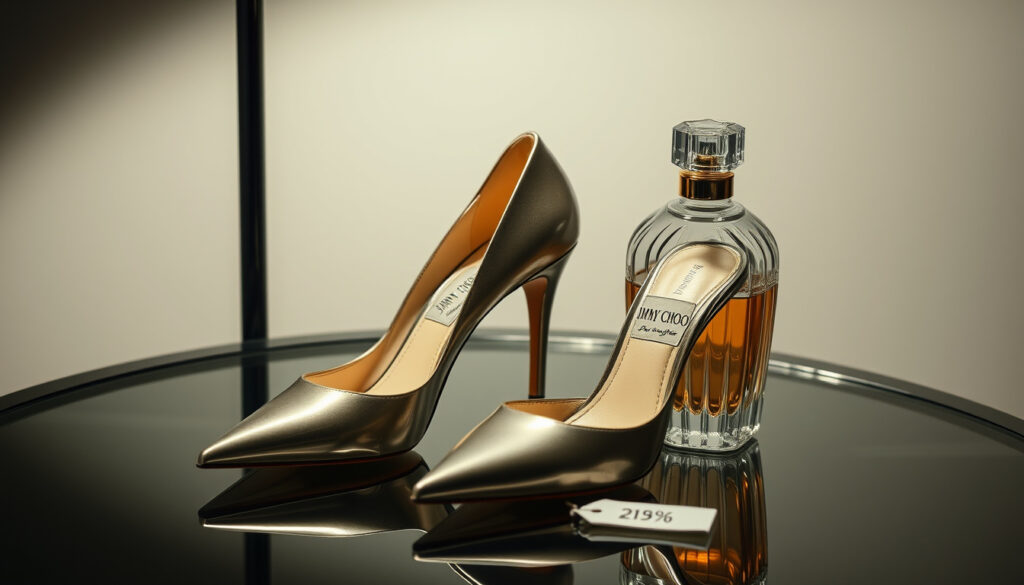
Jimmy Choo Guide: History, Heel Prices, Perfume, CEO & More
There’s a particular kind of hush that falls over a room when someone walks in wearing a pair of Jimmy Choos—it’s a recognition that goes beyond the shoe itself. This guide walks through the brand’s history, the real cost of its heels, its current leadership after the Capri Holdings acquisition, and how its fragrances have become a cultural phenomenon of their own.
Founded: 1996 by Jimmy Choo and Tamara Mellon ·
Average heel price range: $450–$1,200 ·
Perfume average price: $60–$150 for 30–100ml ·
Global stores: Over 150 retail locations ·
Parent company: Capri Holdings Limited since 2017
Quick snapshot
- Founded in 1996 as an East London atelier (Jimmy Choo Official – Our Story)
- Capri Holdings acquired the brand in 2017 (Jimmy Choo Official – Our History)
- Hannah Colman appointed CEO in 2020 (Jimmy Choo Official – Our History)
- Exact retail prices vary by season, region, and materials
- “Most complimented” perfume is a community impression, not a universal fact
- 2026 best-perfume rankings depend on new launches
- 1996: Founded in London (Jimmy Choo Official – Our Story)
- 2001: Jimmy Choo departs the ready-to-wear company (Jimmy Choo Official – Our Story)
- 2017: Acquired by Capri Holdings (Jimmy Choo Official – Our History)
- Watch for new perfume flankers and limited-edition heel drops
- Monitor Capri Holdings announcements for retail expansion
- CEO leadership changes appear in corporate press releases
Below is a quick reference of Jimmy Choo’s key attributes.
| Attribute | Detail |
|---|---|
| Founded | 1996 |
| Founders | Jimmy Choo and Tamara Mellon |
| Headquarters | London, UK |
| Parent | Capri Holdings Limited |
| Category | Luxury footwear, bags, accessories, fragrance |
| Iconic product | ‘I Want Choo’ perfume and evening heel collection |
Who is the shoe designer Jimmy Choo?
Before the brand became a global name, Jimmy Choo himself was a Malaysian-born designer who trained as a shoemaker in London. His story is the classic immigrant-craftsman arc, but the business that carried his name took a different, more corporate path.
How Jimmy Choo started
- Professor Jimmy Y.K. Choo and Tamara Yeardye (now Mellon) co-founded J. Choo Limited in 1996 (Jimmy Choo Official – Our History).
- The brand’s official history says it originated as an East London atelier specialising in bespoke, hand-made shoes in the 1980s (Jimmy Choo Official – Our History).
- Britannica confirms the company launched in 1996, with the first boutique opening on London’s Motcomb Street that same year (Encyclopaedia Britannica – Jimmy Choo biography).
What happened after the founders split
The partnership didn’t last. Jimmy Choo left the ready-to-wear company in 2001, while Tamara Mellon remained until 2011 (Jimmy Choo Official – Our Story). The business world took over from there.
- In 2007, the label was sold to TowerBrook Capital Partners (Wikipedia – Jimmy Choo fashion house).
- In 2017, Capri Holdings—which also owns Versace and Michael Kors—acquired Jimmy Choo (Jimmy Choo Official – Our History).
The implication: the brand’s origin story is now a corporate asset, managed as part of a luxury portfolio. The founder’s craft legacy remains in the product DNA, but the decisions are made by a holding company.
Why is Jimmy Choo so expensive?
Part of the price is real—materials and labor—and part is the machinery of luxury branding. Here’s how the two combine.
Materials and craftsmanship
- Many Jimmy Choo shoes are made in Italy with premium leather, silk, crystals, and hand-finishing methods (Jimmy Choo Official – Signature Craftsmanship).
- The brand originated as a custom-made shoe atelier, and that bespoke heritage informs the production standards today (Jimmy Choo Official – Signature Craftsmanship).
Positioning as a luxury brand
Limited production runs and fashion-season timing keep scarcity high. The brand sells through luxury department stores and its own boutiques, which adds retail margin to every pair (Jimmy Choo Official – Our Story).
Licensing revenue from perfume and accessories
Fragrance lines are licensed to beauty partners and priced within luxury perfume ranges. This licensing model generates revenue without the manufacturing overhead of shoes, which helps the brand maintain its footwear pricing (Jimmy Choo brand history).
The same brand economics that keep heel prices high also fund the marketing that makes the name feel worth it. For a buyer, that means paying for the label is also paying for the expectation the label creates.
This interdependence of pricing and perception defines the brand’s market position.
How much do Jimmy Choo heels cost?
Price tiers exist for a reason: entry-level pumps, bridal styles, and crystal-covered pieces occupy very different brackets.
Entry-level heel prices
- Standard Jimmy Choo pumps typically sell between $450 and $700.
- Current prices should be verified on the brand’s official site or authorized department stores (Jimmy Choo Official – Our Story).
Limited edition and bridal pricing
- Crystal-embellished or limited styles can exceed $1,200.
- Bridal collections often command a premium for materials and detailing.
- Outlet stores and licensed retailers may offer past-season styles at reduced prices (Jimmy Choo Official – Our History).
The pattern: three tiers of demand—core, statement, and ultra-exclusive—each with its own price ceiling. The brand deliberately leaves room at the top for pieces that feel less like shoes and more like collectibles.
Who is the CEO of Jimmy Choo UK?
Leadership at Jimmy Choo has shifted over the years, but the current structure is clear under Capri Holdings.
Leadership under Capri Holdings
- Jimmy Choo is part of Capri Holdings, which owns the brand globally (Jimmy Choo Official – Our History).
- The CEO oversees global strategy, stores, and product licensing.
- Hannah Colman was appointed CEO in 2020 and has been with the company for almost three decades (Jimmy Choo Official – Our History).
What this means: the CEO role is less about design and more about managing a global luxury portfolio. Colman’s longevity at the brand gives her context that an outside hire wouldn’t have, which matters in a house with such a specific aesthetic identity.
Is Jimmy Choo or Versace better?
The question sounds simple, but it’s really asking: do you want an occasion shoe or a statement piece? These are different jobs.
Design identity
- Jimmy Choo focuses on polished evening footwear, bags, and fragrance (Jimmy Choo Official – Our Story).
- Versace is a full fashion house with bold prints, clothing, accessories, and couture influence (Wikipedia – Versace).
Price and product range
Both brands sit in the luxury price segment, but Versace’s broader product range means more entry points across categories—from sunglasses to evening gowns. Jimmy Choo stays tighter, which allows for more consistency in design language.
Which should you choose
- If you want a classic, refined heel that works for weddings and galas, Jimmy Choo is the safer bet.
- If you want a bold print that announces itself from across the room, Versace wins.
Better means better for what you’re doing. Both brands are priced similarly, but the aesthetic payoff is different—one rewards understatement, the other rewards audacity.
The choice ultimately depends on whether you value subtlety or boldness.
Which Jimmy Choo perfume gets the most compliments?
Fragrance reputation is built on community consensus, not universal truth—but some scents do develop a following.
I Want Choo’s reputation
- I Want Choo is a popular Jimmy Choo fragrance launched around 2020 (Jimmy Choo Official – Our History).
- The original Jimmy Choo perfume launched in 2011 and remains a recognizable brand signature.
Best-selling flankers
- Compliment-heavy fragrances are often described in beauty communities as having strong sillage and sweet-floral profiles (Wikipedia – Jimmy Choo fashion house).
- Scent preference is subjective, so sampling is recommended before purchase.
The pattern: compliments come from sillage—the trail of scent a perfume leaves behind. Sweet-floral compositions tend to get noticed, which is why they dominate the “compliment” conversation.
What are the best women’s Jimmy Choo perfumes for 2026?
Rankings shift as new flankers launch and older lines get discontinued. Here’s what to watch.
Current bestsellers
- Fragrance rankings shift as new flankers are launched and older lines are discontinued (Jimmy Choo Official – Our History).
- Retailers such as Sephora, Ulta, and department stores label their own bestsellers.
Fragrance families and notes
- Jimmy Choo’s perfume catalog includes floral, amber, vanilla, and rose-forward compositions (Wikipedia – Jimmy Choo fashion house).
- For 2026 recommendations, use official product availability and third-party sales trends.
The catch: “best” depends on whether you want a safe floral or a statement amber. If you’re buying for someone else, the safe floral is the gift-friendly route.
The table below highlights the differences between Jimmy Choo and Versace.
Jimmy Choo vs. Versace: Comparison table
Three categories, one clear pattern: both are luxury, but they serve different fashion personalities.
| Category | Jimmy Choo | Versace |
|---|---|---|
| Focus | Footwear, bags, fragrance | Full fashion house |
| Aesthetic | Classic evening wear | Bold prints, statement pieces |
| Price range | $450–$1,200 (heels) | Varies across categories |
| Best for | Weddings, galas, formal events | Making a visible statement |
The trade-off: Jimmy Choo gives you reliability in a narrow, refined lane. Versace offers variety but with a louder aesthetic that demands confidence to wear.
Here are the core specifications of the Jimmy Choo brand.
Jimmy Choo spec table
Six spec points, one takeaway: the brand’s infrastructure is built for scale without sacrificing its luxury positioning.
| Spec | Detail |
|---|---|
| Founded | 1996 |
| Headquarters | London, UK |
| Parent company | Capri Holdings Limited |
| CEO | Hannah Colman (since 2020) |
| Production | Italy (primarily) |
| Product lines | Heels, boots, flats, bags, fragrance |
Capri Holdings’ portfolio strategy will determine whether Jimmy Choo expands its retail footprint or stays focused on product depth. Investors should track any mention of the brand in Capri earnings calls.
Tracking Capri’s announcements is key for investors.
Pros and cons
Upsides
- Strong brand recognition and consistent design language
- High-quality materials and craftsmanship with Italian production
- Licensed fragrance line generates revenue without manufacturing overhead
- Global retail presence across over 150 locations
Downsides
- High price points limit accessibility
- Licensing can dilute brand control over fragrance quality
- Competition from more diverse luxury houses like Versace
- Post-founder, corporate ownership may shift the brand’s original vision
Weighing these factors helps buyers decide if Jimmy Choo aligns with their priorities.
How to buy Jimmy Choo shoes
A quick walk through the process, from where to start to what to watch for.
- Browse the official site for current collections and pricing (Jimmy Choo Official – Our Story).
- Check authorized department stores like Nordstrom or Selfridges for seasonal sales.
- Verify authenticity: purchase only from the brand or authorized retailers.
- Consider fit: Jimmy Choo sizing can run narrow, so consider half-size up for wider feet.
- Check condition: secondhand platforms like The RealReal offer past-season styles, but verify authenticity carefully.
Why this matters: the difference between buying at retail and getting burned on a counterfeit is knowing the brand’s distribution channel. Stick to authorized sellers, and you’re protected.
Jimmy Choo timeline
- 1996: Jimmy Choo and Tamara Mellon found the brand in London (Jimmy Choo Official – Our Story).
- 2001: Tamara Mellon becomes CEO and later leads the brand’s growth; Jimmy Choo departs the ready-to-wear company (Jimmy Choo Official – Our Story).
- 2007: Label sold to TowerBrook Capital Partners (Wikipedia – Jimmy Choo fashion house).
- 2011: First Jimmy Choo fragrance launches (Jimmy Choo Official – Our History).
- 2017: Jimmy Choo becomes part of Capri Holdings (Jimmy Choo Official – Our History).
- 2020: I Want Choo fragrance launches; Hannah Colman becomes CEO (Jimmy Choo Official – Our History).
This timeline shows the brand’s journey from bespoke atelier to corporate luxury asset.
Confirmed facts vs. what’s unclear
Clarity helps, especially when you’re spending this much on a pair of shoes.
Confirmed facts
- Jimmy Choo was founded in 1996 in London by designer Jimmy Choo and Tamara Mellon (Encyclopaedia Britannica – Jimmy Choo biography).
- Capri Holdings acquired Jimmy Choo in 2017 (Jimmy Choo Official – Our History).
- Hannah Colman has been CEO since 2020 (Jimmy Choo Official – Our History).
What’s unclear
- Exact current retail prices for every style vary by season, region, and materials.
- “Most complimented” perfume claims are community impressions rather than universal facts.
- 2026 best-perfume rankings depend on new launches and retailer sales reporting.
Knowing these boundaries helps set realistic expectations.
Notable quotes
“The brand’s official history states that Professor Jimmy Y.K. Choo and Tamara Yeardye (now Mellon) co-founded J. Choo Limited in 1996.”
Jimmy Choo Official – Our History
“Jimmy Choo’s official crafting page says the brand originated as an East London atelier specialising in custom-made shoes before becoming a global luxury accessory house.”
Jimmy Choo Official – Signature Craftsmanship
“Jimmy Choo’s official history says the brand began global expansion in 1998 with boutiques on Madison Avenue in New York City and Rodeo Drive in Los Angeles.”
Jimmy Choo Official – Our History
“Britannica says Jimmy Choo Ltd. was launched in 1996 by Choo and Mellon, with the first boutique opening on London’s Motcomb Street later that year.”
Encyclopaedia Britannica – Jimmy Choo biography
For the luxury buyer, the choice is clear: Jimmy Choo delivers a consistent, refined product with strong brand backing—but the real investment is in understanding where the price comes from. Pay for the craftsmanship and the history, not just the name on the box.
jimmychoo.com, jimmychoo.jp, jimmychoo.com, jimmychoo.com, jimmychoo.com, support.jimmychoo.com, support.jimmychoo.com, jimmychoo.com
Frequently asked questions
How can I tell if Jimmy Choo shoes are authentic?
Check the craftsmanship: genuine Jimmy Choo shoes feature precise stitching, high-quality leather, and a consistent logo placement. Purchase only from the official site or authorized retailers to guarantee authenticity (Jimmy Choo Official – Our Story).
Are Jimmy Choo heels comfortable enough for a wedding day?
It depends on the style. Some designs prioritize height over comfort, while others include cushioned insoles. For a wedding, try on the shoes and walk in them before committing—comfort is personal, and there’s no universal answer.
Where is Jimmy Choo made?
Many Jimmy Choo shoes are made in Italy with premium materials and hand-finishing methods (Jimmy Choo Official – Signature Craftsmanship).
Do Jimmy Choo shoes run true to size?
Some wearers report that Jimmy Choo runs narrow, so consider a half-size up if you have wider feet. As with any luxury shoe, try them on in person when possible.
What is the difference between Jimmy Choo couture and the main ready-to-wear line?
Couture refers to bespoke, hand-made shoes, which is where the brand originated. The ready-to-wear line is mass-produced in factories, while true couture is made to order for individual clients (Jimmy Choo Official – Our Story).
How should I clean and store Jimmy Choo heels?
Store them in the dust bags provided and keep them away from direct sunlight. For cleaning, use a soft brush for leather and a damp cloth for crystals. Avoid water exposure on suede—use a specialized suede protector instead.
Related reading
- Victoria Beckham: Net Worth, Health, Family & Career Facts
- Christy Turlington: Biography, Advocacy & Family Life
For buyers, Jimmy Choo offers a consistent luxury experience rooted in craftsmanship and corporate stability; investors should watch Capri Holdings for brand direction.
More related posts
 Mexican Food Near Me – Best Restaurants in Delaware
 Terrence Howard’s Math Theory and Acting Hiatus
 Sacha Baron Cohen Movies: Best Films, Netflix & Controversies
 Daniel Ricciardo: What Happened to the F1 Star? 2026 Update
 P&J Live Aberdeen: Cost, Capacity, Dress Code & Events
 Holger Rune: Achilles Injury, Ranking Slump & Mother Controversy
 Midland Metropolitan University Hospital – Location, Services and Key Facts
 Victoria Beckham: Net Worth, Health, Family & Career Facts
