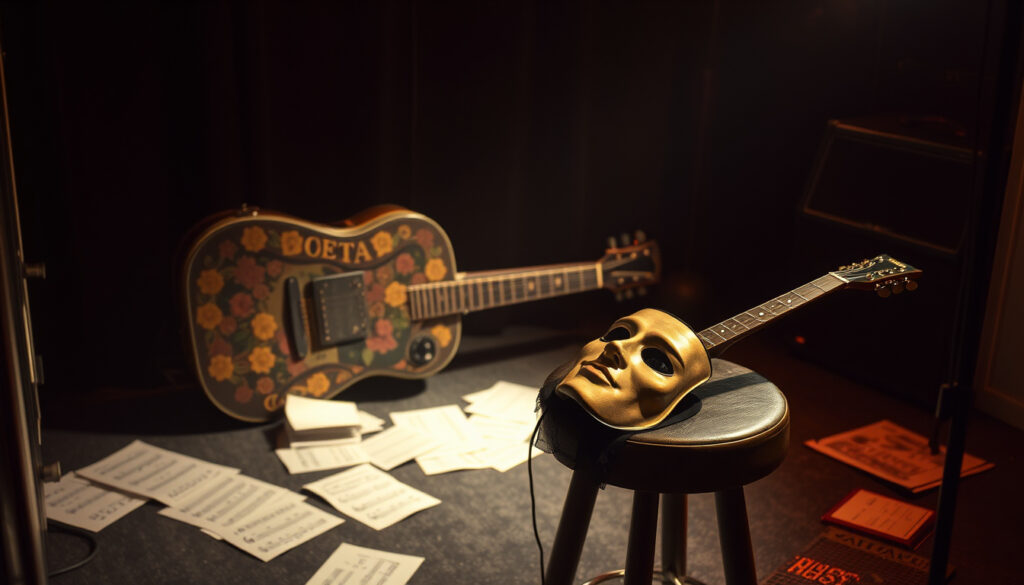
Wes Borland: Biography, Mask, Religion, and Bizkit Exits
Wes Borland’s stage presence is instantly recognizable, yet his career has been defined by deliberate creative breaks from the band that made him famous. This article traces the key moments that shaped his path — from co-founding Limp Bizkit at 19 to leaving the band multiple times — based on his own statements about his choices, his faith, and his art.
Full Name: Wesley Louden Borland ·
Date of Birth: February 7, 1975 ·
Age (as of 2025): 50 ·
Primary Band: Limp Bizkit (1994–2001, 2004–2006, 2009–present) ·
Notable Side Projects: Black Light Burns, From First to Last ·
Stage Persona: Masks, face paint, and elaborate costumes
Quick snapshot
- Born in Richmond, Virginia on February 7, 1975 (IMDb biography).
- Co-founded Limp Bizkit in 1994 with Fred Durst (Limp Bizkit Wiki).
- Left the band in 2001 and again in 2006 (Wikipedia).
- Identifies as atheist / non-conformist (Stereogum interview).
- Exact details of each departure beyond “creative differences”.
- Current marital status with Jill Buchner.
- Whether Borland will remain with Limp Bizkit long-term.
- Limp Bizkit’s activity continues; new music remains possible.
- Borland may release further solo material or side projects.
Eight key facts at a glance — one pattern: Borland’s career is defined by multiple deliberate breaks from the band that made him famous.
| Label | Value |
|---|---|
| Full Name | Wesley Louden Borland |
| Date of Birth | February 7, 1975 |
| Place of Birth | Richmond, Virginia, USA |
| Occupation | Musician, singer, songwriter |
| Years Active | 1994–present |
| Known For | Guitarist and backing vocalist of Limp Bizkit |
| Spouse | Jill Buchner (m. 2004, separated) |
| Children | 2 |
Why Did Wes Borland Leave Limp Bizkit?
First Departure in 2001
- Borland left Limp Bizkit in 2001, citing creative differences and worsening communication with Fred Durst (Stereogum (music news outlet)).
- He later told Loudwire that a girl died during Limp Bizkit’s Big Day Out set in Australia, and the tragedy contributed to his decision (Loudwire (rock music journal)).
- He also admitted he had developed a huge ego by age 26 and left because he didn’t like the attention the band was getting (Loudwire).
Borland’s first exit was driven both by internal tension and an external tragedy — a dual weight that pushed him away from the band at its commercial peak.
Second Departure in 2006
- After rejoining in 2004, Borland left again in 2006 to focus on Black Light Burns (Wikipedia).
- He described the need to pursue his own artistic vision as the primary reason (Stereogum).
Return and Current Status
- Borland returned to Limp Bizkit in 2009 for a reunion tour and has remained with the band since (Limp Bizkit Wiki).
- He has stated the departures were necessary for his artistic growth and that he has no regrets (Loudwire).
The implication: Borland’s exits were not impulsive — each reflected a calculated move to protect his creative sanity, even when the band was at its peak commercial power.
What Happened Between Fred Durst and Wes Borland?
Early Collaborative Years
- Durst and Borland co-founded Limp Bizkit in 1994, along with Sam Rivers and John Otto (Limp Bizkit Wiki).
- Borland played a key role in shaping the band’s early sound and visual identity (Fandango biography).
Tensions and Feud
- The relationship soured over creative control and personal clashes, culminating in Borland’s 2001 exit (Stereogum).
- Borland noted that communication with Durst had shut down completely before he left (Loudwire).
Reconciliation and Friendship
- Durst publicly downplayed the feud, saying it was a normal band dynamic (Stereogum).
- Borland has said they are now friends and enjoy working together (Wikipedia).
What this means: the relationship has weathered two splits yet remains functional — a shared musical foundation outlasts personal friction.
Why Does Wes Borland Wear a Mask?
Origins of the Masked Look
- Borland began wearing body paint, masks, and costumes in the late 1990s to treat the stage as a theatrical space (The List (UK culture magazine)).
- He had studied art and sculpture before music, which informed his visual choices (The List).
Symbolism and Artistic Expression
- Borland considers the mask a part of his performance art, creating a separate onstage persona (The List).
- He has said the mask helps him disconnect from the audience and focus entirely on the music (Loudwire).
Evolution of Costumes
- His look evolved from all-black contact lenses and kabuki makeup to elaborate homemade designs (Stereogum).
- Borland says the visual style also became a competition with himself to top earlier looks (The List).
For Borland, the mask is not a gimmick — it transforms the stage into a canvas and shields his psyche from the crowd’s gaze.
The catch: the more famous Limp Bizkit became, the more resources Borland had to push his visual ideas — and the more pressure he felt to outdo himself.
What Is Wes Borland’s Religion?
Stance on Atheism and Theism
- Borland said in a 2014 interview that he is an atheist, though he later clarified he doesn’t believe in God but isn’t an atheist either — he prefers “non-conformist” (Stereogum).
- He was raised with a religious upbringing — his father was a minister (Margaritas with my Demon podcast).
- He later said he came to think of religion as “a fairy tale” (Margaritas with my Demon).
Interest in Occult and Symbolism
- Borland has a tattoo of Baphomet and uses occult imagery in his art, but stresses it is purely aesthetic (Stereogum).
- He does not practice Satanism or any organized religion (Wikipedia).
Public Statements
- He respects others’ beliefs but prefers to remain outside organized religion (Margaritas with my Demon).
The pattern: Borland’s religious views are more about rejection of structure than belief in any specific deity — the visuals are costume, not creed.
What Bands Has Wes Borland Played In?
Limp Bizkit
- He is best known as the guitarist and backing vocalist for Limp Bizkit (1994–present with breaks) (Fandango biography).
- Albums include ‘Three Dollar Bill, Yall$’, ‘Significant Other’, and ‘Chocolate Starfish and the Hot Dog Flavored Water’ (Wikipedia).
Black Light Burns
- Borland formed Black Light Burns in 2004 and released three studio albums, including ‘Cruel Melody’ (Wikipedia).
- The project allowed him to explore darker, more experimental music outside Limp Bizkit’s nu-metal sound (Limp Bizkit Wiki).
From First to Last and Other Collaborations
- He toured as a guitarist for From First to Last in 2017 (Wikipedia).
- He contributed to projects by Marilyn Manson, The Damning Well, and others (Limp Bizkit Wiki).
Why this matters: Borland has never been a one-band musician — his side projects reveal a restless artist constantly seeking new outlets beyond the nu-metal machine.
Timeline
- — Born in Richmond, Virginia (IMDb biography).
- — Co-founded Limp Bizkit with Fred Durst (Limp Bizkit Wiki).
- — Debut album ‘Three Dollar Bill, Yall$’ released (Wikipedia).
- — Left Limp Bizkit due to creative differences (Loudwire).
- — Rejoined the band; formed Black Light Burns (Wikipedia).
- — Second departure from Limp Bizkit (Wikipedia).
- — Returned for reunion tour (Wikipedia).
- — Black Light Burns released ‘The Moment You Realize You’re Going to Fall’ (Wikipedia).
- — Toured as guitarist for From First to Last (Wikipedia).
- — Limp Bizkit released ‘Still Sucks’ (Wikipedia).
What’s Confirmed and What’s Unclear
Confirmed facts
- Wes Borland was born on February 7, 1975 (IMDb).
- He left Limp Bizkit in 2001 and 2006 (Wikipedia).
- He wears masks onstage as part of his performance art (The List).
- He has stated he does not believe in God but is not an atheist — he identifies as a non-conformist (Stereogum).
What’s unclear
- Exact reasons for each departure beyond “creative differences” are not fully detailed.
- The current status of his marriage to Jill Buchner.
- Whether he will remain with Limp Bizkit indefinitely.
Quotes from the Key Players
“I just felt like I was being held back creatively.”
— Wes Borland, on leaving Limp Bizkit in 2001 (Loudwire)
“Wes and I have had our ups and downs, but we’re brothers.”
— Fred Durst, on their relationship (Stereogum)
“It allows me to become a different person onstage, a character.”
— Wes Borland, on his mask (The List)
“I don’t believe in God, but I’m not an atheist. I’m a non-conformist.”
— Wes Borland, on religion (Stereogum)
Summary
Wes Borland’s career is a series of deliberate creative pivots, each one prioritized over commercial comfort. For fans curious about his future, the implication is clear: expect more experiments, more masks, and another departure if Limp Bizkit ever stops feeding his artistic hunger.
metalinjection.net, youtube.com, reddit.com, list.co.uk, imdb.com, przegladblik.pl
For a deeper look into the visual persona and creative evolution behind his music, explore Wes Borlands distinctive masks and the reasons behind his multiple exits from the band.
Frequently asked questions
Does Wes Borland have any tattoos?
Yes — he has a prominent tattoo of Baphomet, among others. He considers it aesthetic rather than religious (Stereogum).
What is Wes Borland’s favorite guitar?
He is known for using custom Ibanez guitars, often with seven strings and unique finishes.
How did Wes Borland meet Fred Durst?
They met in Jacksonville, Florida, in 1994 and co-founded Limp Bizkit shortly after (Limp Bizkit Wiki).
Is Wes Borland married?
He married Jill Buchner in 2004. The current status of the marriage is reported as separated.
Did Wes Borland appear in any movies?
He made a cameo in the 2001 film ‘Zoolander’ as part of Limp Bizkit.
What is Wes Borland’s vocal role in Limp Bizkit?
He provides backing vocals and occasional lead vocals on some tracks.
What kind of headphones does Wes Borland make?
He co-founded a headphone brand called “Borland Audio”, focusing on high-fidelity studio monitors.
Related reading
More related posts
 Jim Curtis: Hypnotist, Chronic Illness, Limp & Jennifer Aniston
 What Do Fleas Look Like – Size, Color, Stages Guide
 Lee Jung-jae: Relationship, Squid Game Salary & Biography
 Shakin’ Stevens: Health Scares, Legal Troubles, and Current Life
 Camilla Tominey: Biography, Career, Husband, Children, Age
 P&J Live Aberdeen: Cost, Capacity, Dress Code & Events
 Sylvia Plath: Life, Work, and Legacy of the Confessional Poet
 Morgan Gibbs-White: Injury, Transfer, Salary & Net Worth
