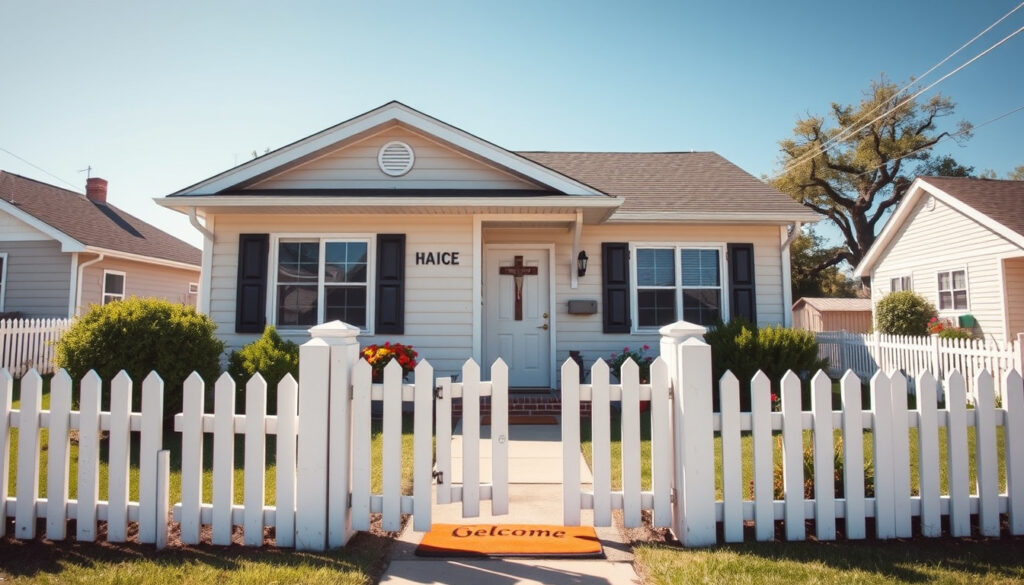
Ned Flanders: Catchphrase, Religion, and Character Analysis
You know that neighbor who’s almost too nice to be real? That’s Ned Flanders — but behind the sweater-vest and the Bible verses, The Simpsons’ most pious resident carries a surprisingly complex history as a foil to Homer and a symbol of “Flanderization.”
First appearance: December 17, 1989 (Simpsons Roasting on an Open Fire) ·
Voiced by: Harry Shearer ·
Full name: Nedward Flanders Jr. ·
Occupation: Pharmacist / Left-handed store owner ·
Episodes featuring prominently: Over 100
Quick snapshot
- Catchphrase is “Okily Dokily” (Wikisimpsons (community-run wiki))
- Devout Evangelical Christian (Wikipedia (encyclopedia)) (Wikisimpsons (community-run wiki))
- Voiced by Harry Shearer (Wikipedia (encyclopedia)) (Wikisimpsons (community-run wiki))
- Owns the Leftorium (Wikisimpsons (community-run wiki)) (Wikisimpsons (community-run wiki))
- Exact birth year is not stated in canon (ScreenRant (entertainment news outlet))
- Whether his buff physique is a deliberate character choice or a continuity error is debated (ScreenRant (entertainment news outlet))
- Whether Ned is multilingual is unconfirmed (ScreenRant) (ScreenRant (entertainment news outlet))
- Whether Ned actually donated a kidney and lung is unclear in canon (Wikisimpsons) (ScreenRant (entertainment news outlet))
- Ned remains a regular character in ongoing seasons
- Occasional episodes revisit his faith and family dynamics
Six core facts define Ned Flanders in a nutshell — from his full name to his family status.
| Attribute | Value |
|---|---|
| Full Name | Nedward Flanders Jr. |
| Voiced by | Harry Shearer |
| First Episode | Simpsons Roasting on an Open Fire (1989) |
| Occupation | Pharmacist / Left-handed store owner |
| Spouse | Maude Flanders (deceased) |
| Children | Rod and Todd Flanders |
What was Ned Flanders’ catchphrase?
Origin of “Okily Dokily”
Ned Flanders’ signature catchphrase is “Okily Dokily” — a cheerful, exaggerated take on “okay” that he uses to express agreement, greeting, or simple happiness. Wikisimpsons (community-run wiki) notes the phrase appears in nearly every episode featuring the character. The delivery was created by voice actor Harry Shearer, who intentionally stretched the word into a singsong cadence that has become synonymous with the character.
Shearer’s decision to insert a “diddly” infix turned a mundane word into a meme — and gave writers an instant personality marker for Ned.
Variations and usage in the series
Beyond “Okily Dokily,” Ned employs a distinctive speech pattern that includes inserting “diddly” and “doodily” into words. For example, he might say “That was a-diddly-icious dinner!” This linguistic tic, documented by Wikipedia (encyclopedia), reinforces his childlike innocence and religious earnestness. The catchphrase has been referenced in countless parodies and even real-world merchandise, cementing its place in pop culture.
What does Ned Flanders represent?
Religious foil to Homer Simpson
Ned Flanders is often described as the “anti-Homer” — a devout Evangelical Christian who is unfailingly polite, hardworking, and community-oriented. Wikipedia (encyclopedia) frames him as the good-natured foil to Homer, with the two functioning as contrasting neighbor archetypes. Homer’s laziness, cynicism, and selfishness are magnified when set against Ned’s earnest volunteer work and literal Bible observance.
“I’m a little confused, did I do something wrong?”
— Ned Flanders, “Hurricane Neddy” (season 8)
Satire of evangelical Christianity
The writers use Ned to critique extreme piety while keeping him sympathetic. He is frequently shocked when challenged on doctrine, but his kindness — donating a kidney and a lung, as noted by Wikisimpsons (community-run wiki) — makes him more than a punchline. A blogger at VoVatia (fan commentary site) observed that later seasons turned him into a “Religious Right Moral Guardian” type, yet his core decency remains.
The pattern: Ned represents the tension between genuine goodness and hollow religiosity — a duality that makes him both a foil and a conscience for Springfield.
The implication: Ned’s role is not just comic relief but a mirror for the audience’s views on faith and neighborliness.
Why is Ned Flanders so buff?
Fitness in later seasons
Around season 11, viewers began noticing that Ned Flanders had become noticeably muscular — a stark contrast to his slim, sweater-clad early appearance. ScreenRant (entertainment news outlet) calls buff Ned “one of the most surprising aspects of the character,” noting that his physique contrasts sharply with his mild-mannered, conservative persona. The change is often played for visual comedy, especially when Ned out-lifts or outruns Homer.
Ned’s muscles underscore his discipline — if he applies the same dedication to fitness that he does to faith, it makes sense logically. But for a character defined by humility, the sudden biceps create a humorous incongruity.
Behind the scenes reasons
No official explanation has been given for the physical transformation. Some fans interpret it as a continuity error, while others see it as an organic part of “Flanderization” — the process by which a character’s defining traits are exaggerated over time, as described by ScreenRant (entertainment news outlet). The ambiguity leaves room for debate, but the visual joke works regardless.
Why is Ned Flanders so religious?
Childhood backstory (Hurricane Neddy)
The episode “Hurricane Neddy” (season 8) reveals that Ned’s intense faith stems from a traumatic childhood. His parents were strict, religious disciplinarians who punished him harshly. Wikipedia (encyclopedia) notes that this backstory adds depth: Ned isn’t simply born devout — his piety is a coping mechanism for deep-seated emotional wounds.
Role in Springfield’s religious community
Ned attends church regularly, leads prayer groups, and is frequently shown doing volunteer work. Wikisimpsons (community-run wiki) lists acts of charity such as donating a kidney and a lung — extreme generosity that reflects his belief in self-sacrifice. Yet the same devotion makes him vulnerable: his faith is tested repeatedly by tragedy, especially the death of his wife Maude.
“Okily Dokily!”
— Ned Flanders (multiple episodes)
Why this matters: Ned’s religiosity isn’t just a joke — it’s the engine of his character, driving both his kindness and his fragility.
How does Ned Flanders say “OK”?
Pronunciation and mannerisms
Ned pronounces “OK” as “Okily Dokily,” inserting a “diddly” infix that elongates the word. The delivery is almost always accompanied by a thumbs-up, a wide grin, and a slight head nod. This mannerism has become one of the most recognizable speech patterns in animation, cataloged by Wikisimpsons (community-run wiki).
Cultural impact of the delivery
The phrase has transcended the show, entering everyday slang and internet meme culture. A quick search on social media reveals “Okily Dokily” used ironically to signal agreement with exaggerated enthusiasm. ScreenRant (entertainment news outlet) notes that the line is often cited as a defining characteristic, even by people who have never watched a full episode.
The catch: the phrase’s simplicity masks the nuance of a man who hides pain behind cheerfulness.
Quotes that define Ned Flanders
“Okily Dokily!”
— Ned Flanders (in nearly every episode)
“Later seasons made Flanders more of a ‘Religious Right Moral Guardian’ type.”
— Commentator at VoVatia (fan analysis blog)
Summary: What Ned Flanders teaches us about sitcom neighbors
Ned Flanders began as a simple foil — the annoyingly perfect neighbor who made Homer look worse. Over 30 seasons, he evolved into a layered character whose faith, trauma, and unexpected physicality offer a running commentary on suburban Christianity and the limits of niceness. For viewers, the takeaway is clear: the most interesting characters are often the ones who seem simplest at first glance. For writers, the lesson is that “Flanderization” — amplifying one trait until it defines a character — can be a creative asset if handled with depth.
simpsons.fandom.com, youtube.com, en.wikipedia.org, nohomers.net
For a deeper look at how religion and catchphrases shape his role, see this analysis of Ned Flanders character dynamics in The Simpsons.
Frequently asked questions
How did Ned Flanders become a character on The Simpsons?
Ned was created as a contrast to Homer — a religious, overly friendly neighbor. His design and personality were shaped by Matt Groening and the early writing team, with his last name reportedly inspired by Flanders Street in Portland, Oregon.
What is Ned Flanders’ full name?
Nedward Flanders Jr.
What episode does Ned Flanders’ wife die?
Maude Flanders dies in the season 11 episode “Alone Again, Natura-Diddly” (2000).
Does Ned Flanders have a mental breakdown?
Yes — in “Hurricane Neddy” (season 8), Ned experiences a psychological breakdown after his house is destroyed, revealing unresolved childhood trauma.
What is the left-handed store Ned Flanders owns?
The Leftorium, a store that caters to left-handed customers.
How many times has Ned Flanders said ‘Okily Dokily’?
An exact count is not established, but the phrase appears in the vast majority of episodes featuring Ned — well over 100 times.
Is Ned Flanders based on a real person?
No — he is a fictional creation, though his last name is said to come from Flanders Street in Portland, Oregon, Matt Groening’s hometown.
Related reading
More related posts
 Tommee Tippee Blackout Blind – Guide, Reviews and Tips
 Man City vs Brighton: TV Channel, Prediction & Live Updates
 Joe Gomez: Career, Stats, Wife, Parents & Never Scored
 Peter Denyer: Actor, Pantomime Writer and Dennis Dunstable
 Brandon Sklenar: Bio, Age, Height, Wife, Movies & TV Shows
 When Will Fortnite Servers Be Back Up UK – Live Status and Timelines
 Where to Watch Manchester United vs Brighton: FA Cup 2026 Live
 Josh Hartnett: Why He Quit Hollywood & His Family Life
