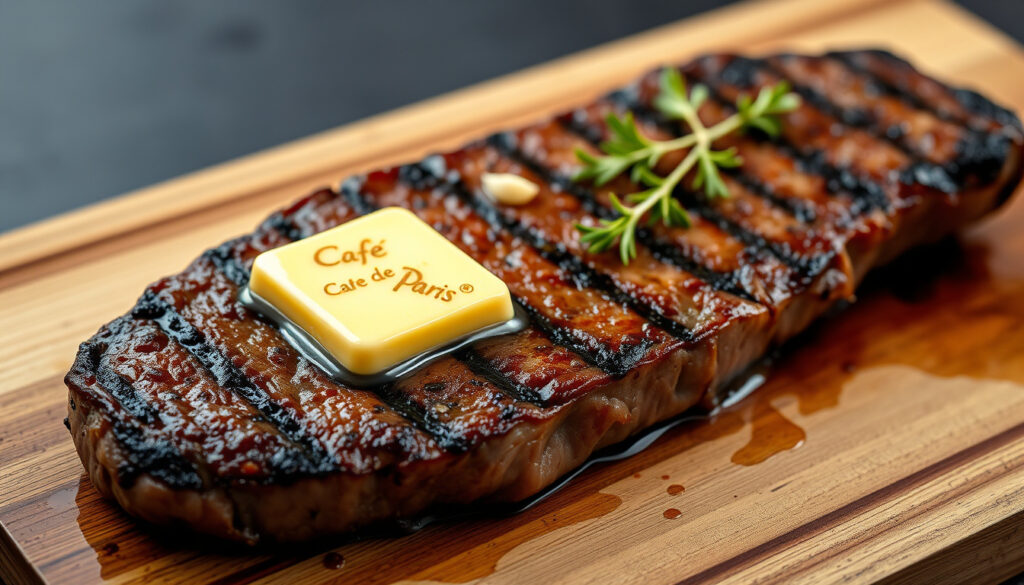
Cafe de Paris Butter – History, Recipe and Steak Guide
Café de Paris butter is a compound butter that has become synonymous with perfectly grilled steaks and Swiss culinary tradition. Originating from a single Geneva restaurant in 1941, this aromatic blend of herbs, spices, and umami-rich ingredients has captured the attention of home cooks and professional chefs worldwide.
The butter’s history is marked by secrecy—its original recipe remains a closely guarded family secret, much like famous proprietary blends such as KFC’s seasoning. Despite this, chefs and food enthusiasts have spent decades attempting to recreate the distinctive flavor profile that makes Café de Paris butter so desirable. Today, variations of this compound butter appear in kitchens across the globe, served alongside sizzling steaks and grilled meats.
This guide explores the origins, ingredients, preparation methods, and practical uses of Café de Paris butter, drawing from established sources and chef recreations to provide a comprehensive understanding of this iconic Swiss creation.
What Is Café de Paris Butter?
Café de Paris butter, also referred to as Geneva butter or Café de Paris sauce depending on how it is prepared, is a compound butter created specifically as a topping for entrecôte—Swiss-style sirloin steak. The butter is named after the restaurant where it originated, though its name suggests French heritage rather than Swiss.
Unlike simple herb butters, Café de Paris butter combines savory, tangy, and subtly spiced elements. The inclusion of anchovies and Worcestershire sauce provides depth, while fresh herbs and mustard contribute brightness and complexity.
At a Glance
What Makes It Unique
Several characteristics distinguish Café de Paris butter from other compound butters:
- The combination of anchovies with fresh herbs creates an umami depth rarely found in standard herb butters
- Worcestershire sauce adds layers of savory complexity
- Some versions incorporate curry powder or toasted spices for warmth
- The butter is traditionally paired with entrecôte, a specific cut of beef popular in French-speaking regions
- Its secret status has generated significant culinary curiosity and numerous chef interpretations
Professional chefs including Neil Perry, Marco Pierre White, and Skye Gyngell have developed their own versions of Café de Paris butter. While these recreations cannot claim to be the original, they represent informed attempts to capture the essence of the Geneva recipe.
Comparing Café de Paris Butter to Similar Sauces
| Aspect | Café de Paris Butter | Béarnaise Sauce |
|---|---|---|
| Base | Unsalted butter | Clarified butter and egg yolk emulsion |
| Key Flavors | Anchovies, Worcestershire, herbs | Tarragon, shallots, white wine |
| Texture | Solid when cold, melts on hot food | Rich, pourable emulsion |
| Primary Use | Steak topping | Steak and grilled protein accompaniment |
| Origin | Geneva, Switzerland (1941) | France (classical cuisine) |
While both sauces complement steak, Café de Paris butter emphasizes savory umami elements from anchovies and Worcestershire, whereas béarnaise relies on the distinctive flavor of tarragon and a silky emulsion base.
Café de Paris Butter Recipe and Ingredients
Creating Café de Paris butter at home requires straightforward ingredients and minimal equipment. The key to success lies in using high-quality butter softened to room temperature and finely incorporating the various flavor components for even distribution.
Core Ingredients
While no verified “authentic” recipe exists publicly—due to the proprietary nature of the original—several chef interpretations provide reliable frameworks. Common ingredients across most versions include:
Some recipes include additional elements such as Tabasco sauce for heat, chilli flakes, Parmesan cheese for umami, curry powder for earthiness, or even maple syrup for sweetness. These variations reflect individual chef preferences rather than established tradition.
Step-by-Step Preparation
The preparation process for Café de Paris butter involves five main stages, requiring approximately 10 minutes of active time plus chilling:
- Soften the butter: Remove unsalted butter from refrigeration and allow it to reach room temperature. This step is essential for achieving a smooth, workable consistency that incorporates other ingredients evenly.
- Prepare the add-ins: Finely chop or mince the shallots, garlic, and fresh herbs. If using anchovies, mash them to a paste consistency for better distribution throughout the butter.
- Combine ingredients: Place the softened butter in a mixing bowl or food processor. Add the prepared ingredients along with Worcestershire sauce, lemon juice and zest, Dijon mustard, and paprika. Mix until uniformly combined.
- Season and adjust: Taste the mixture and adjust seasoning as needed. Additional lemon juice, salt, or other elements can enhance the final flavor profile.
- Shape and chill: Transfer the butter mixture onto parchment paper or plastic wrap. Roll into a log shape, twisting the ends tightly to compact the butter. Refrigerate for at least 3 hours or until firmly set.
Common Preparation Methods
Different mixing techniques produce varying textures:
- Food processor: Produces the smoothest, most uniform texture ideal for slicing cleanly
- Electric whisk: Creates a lighter, airy consistency while thoroughly incorporating ingredients
- Fork or spatula: Yields a more rustic, textured result with visible herb pieces
For a sauce variant, gently melt the butter mixture off-heat while whisking, creating a pourable consistency suitable for basting grilled meats or serving as a dipping accompaniment.
How to Use Café de Paris Butter
The traditional application of Café de Paris butter involves placing cold slices onto hot cooked steak or grilled meats, allowing the butter to melt and release its flavors across the surface. This simple technique transforms ordinary proteins into restaurant-quality dishes.
Primary Applications
- Steak topping: Slice cold Café de Paris butter and place atop freshly grilled sirloin, entrecôte, or ribeye steaks immediately after removing from heat. The residual warmth melts the butter, creating a glossy, flavorful coating.
- Chicken enhancement: Grilled or pan-seared chicken breasts and thighs benefit from the herby, savory qualities of this compound butter.
- Seafood pairing: While unconventional, some chefs apply Café de Paris butter to grilled fish or shellfish for unexpected depth.
- Sauce base: Melted Café de Paris butter serves as a dipping sauce for crusty bread or a finishing sauce for various dishes.
Is Café de Paris Butter Spicy?
The base recipe is not inherently spicy, focusing instead on savory and herby elements. However, some preparations include ingredients that introduce heat. According to Desert Island Dishes, recipes from their collection include chilli flakes for those seeking warmth, while BBC Good Food features chef Thomas Straker’s version that incorporates a tablespoon of Tabasco sauce.
Those seeking heat-free versions can omit these ingredients entirely—the butter remains flavorful without them. Many established culinary sources offer mild variations that maintain the core flavor profile.
Serving Suggestions
For optimal results, allow cooked meat to rest briefly before applying the butter. A single slice per serving typically provides sufficient flavor impact. The butter can be prepared in advance and stored, making it a convenient component for entertaining or weeknight dinners.
Tips for Authentic Café de Paris Butter
Achieving the best results with Café de Paris butter involves attention to ingredient quality, proper technique, and appropriate storage. Several practical considerations can elevate the final product.
Ingredient Quality Matters
The foundation of any compound butter is the butter itself. High-quality unsalted butter—whether European-style with higher fat content or premium local options—produces noticeably superior results. Serious Eats recommends selecting butter with at least 82% fat content for the best texture and flavor. The butter’s quality directly influences texture, flavor, and how well it holds the other ingredients.
- Choose unsalted butter to maintain control over seasoning
- Fresh herbs provide brighter flavor than dried alternatives, though dried tarragon works well in some recipes
- Quality Worcestershire sauce contributes significant depth—avoid cheap imitations
- Anchovy fillets should be packed in oil and used fresh
Storage and Preservation
Proper storage extends the usability of Café de Paris butter significantly. Refrigerated in appropriate wrapping, the butter maintains quality for up to two weeks. Frozen, it remains usable for six months when properly wrapped to prevent freezer burn.
For refrigerator storage, wrap the butter log tightly in parchment paper followed by plastic wrap, or place in an airtight container or ramekin covered with clingfilm. For freezing, maintain the log shape and wrap in multiple layers before placing in freezer bags.
When ready to use frozen butter, thaw overnight in the refrigerator rather than at room temperature to preserve texture. To soften without fully melting, microwave in short bursts of 5-10 seconds, checking frequently.
Make-Ahead Advantages
One of Café de Paris butter’s greatest practical advantages is its make-ahead potential. Preparing the butter days or weeks before serving eliminates last-minute kitchen stress. Simply slice the desired number of portions and store them in the refrigerator until needed.
For more information about global culinary traditions and regional specialties, explore Countries of the World – Complete 2025 List and Key Facts.
The History of Café de Paris Butter
Understanding the timeline of Café de Paris butter reveals its evolution from a single restaurant’s signature creation to a globally recognized culinary concept. The butter’s journey spans over eight decades of culinary tradition and adaptation.
Timeline of Key Developments
- 1941: Café de Paris butter is created at the Café de Paris restaurant in Geneva, Switzerland, as a signature topping for the restaurant’s entrecôte Café de Paris dish. The specific inventor remains unidentified in available sources.
- Post-World War II era: The butter gains recognition as patrons experience the signature entrecôte dish featuring the aromatic compound butter. The restaurant establishes itself as a destination for steak enthusiasts.
- 1980s: Following the owner’s death, the original recipe remains within the family, intensifying its secrecy. The restaurant continues serving the dish using the proprietary formula.
- 2000s: Professional chefs begin publishing their own interpretations, fueling interest among home cooks. Publications and cooking shows feature recreations of the Geneva original.
- Present day: Café de Paris butter has become a global phenomenon, with countless variations appearing in cookbooks, food blogs, and video tutorials. Home cooks regularly prepare the butter as part of steak night traditions.
The continued secrecy surrounding the original Café de Paris recipe has contributed significantly to its mystique. Similar to how KFC guards its fried chicken seasoning, the Geneva restaurant maintains that the precise herb and spice blend remains a family secret. This exclusivity has not prevented the culinary world from attempting recreations but has ensured that no definitive “authentic” recipe exists publicly.
What We Know and What Remains Unclear
Separating established facts from speculation helps provide clarity about Café de Paris butter. Several aspects are well-documented, while others remain subjects of debate or simply unknown.
Established Information
- The butter originated at Café de Paris in Geneva, Switzerland
- It was created in 1941 specifically for the restaurant’s signature entrecôte dish
- The restaurant still operates and serves the dish today
- The recipe remains a closely guarded secret
- Various chefs have published interpretations and recreations
- The butter typically contains herbs, anchovies, Worcestershire sauce, mustard, and lemon
Information That Remains Unclear
- The identity of the original creator remains unconfirmed in public sources
- Claims connecting the butter to individuals named Freddy Dumont or Dumont lack verified documentation
- The precise proportions and specific ingredients in the original recipe are unknown
- Whether the modern restaurant still uses the 1941 recipe or a modified version is unclear
- The exact reason for the “Café de Paris” name despite Swiss origins has not been definitively explained
When researching Café de Paris butter online, users encounter numerous claims about its origins and ingredients. Many social media versions include unverified variations that may significantly diverge from any historical precedent. Relying on chef recreations from established culinary publications and verified recipe sources provides more reliable results than unverified internet claims.
For dining recommendations and local food discoveries, visit Mexican Food Near Me – Best Restaurants in Delaware.
Why Café de Paris Butter Matters in Modern Cooking
Café de Paris butter represents more than just a condiment—it embodies the intersection of tradition, mystery, and accessible culinary excellence. Its enduring popularity stems from several factors that resonate with contemporary cooking culture.
The butter exemplifies the compound butter technique that professional kitchens have employed for centuries, making it an accessible entry point for home cooks interested in elevating simple proteins. Unlike complex sauces requiring precise temperature control or specialized equipment, compound butter demands only basic kitchen skills and produces reliably impressive results.
Additionally, the butter’s secret origins appeal to culinary curiosity, inviting experimentation and personal interpretation. Each chef and home cook who attempts a recreation contributes to a collective exploration of flavors—a living culinary dialogue spanning generations and continents.
The practical advantages cannot be overlooked: a 10-minute preparation time, make-ahead convenience, and compatibility with proteins beyond beef all contribute to the butter’s practical appeal. In an era emphasizing make-ahead cooking and meal preparation, compound butter represents an efficient strategy for weekday dinners and entertaining alike.
The butter that started as a Swiss restaurant secret has become a global home cooking staple, proving that great flavors need not remain hidden forever.
Summary
Café de Paris butter is a compound butter created in Geneva in 1941 as a signature topping for entrecôte steak. Its closely guarded original recipe has inspired numerous chef recreations, all approximating the distinctive combination of herbs, anchovies, Worcestershire sauce, and mustard that defines this Swiss classic. Preparation requires only 10 minutes of active time, and the butter keeps for two weeks refrigerated or six months frozen, making it an ideal make-ahead addition to any steak dinner. While the true original recipe remains secret, available interpretations provide reliable frameworks for home cooks seeking to experience this legendary butter.
Frequently Asked Questions
Can you buy pre-made Café de Paris butter?
Pre-made Café de Paris butter is rarely available in supermarkets. Some specialty food shops and online retailers may carry commercial versions, though quality varies. Most consumers prepare the butter at home using published recipes from chefs and food writers.
How long does Café de Paris butter last in the refrigerator?
Properly stored in parchment or plastic wrap, Café de Paris butter maintains quality in the refrigerator for up to two weeks. Ensure the butter is tightly wrapped to prevent absorption of other food odors.
Is Café de Paris butter very spicy?
The base recipe is not spicy. Some variations include chilli flakes or Tabasco sauce for heat, but these are optional additions. Standard preparations focus on savory, herby, and umami flavors without significant heat.
Can Café de Paris butter be frozen?
Yes. Café de Paris butter freezes well for up to six months when wrapped tightly in multiple layers of plastic wrap and placed in freezer bags. Thaw overnight in the refrigerator before using.
What is the difference between Café de Paris butter and Café de Paris sauce?
The terms are often used interchangeably, though “butter” typically refers to the solid compound butter form while “sauce” may describe a melted version used for basting or dipping. Both contain similar core ingredients.
What meats pair well with Café de Paris butter?
While traditionally paired with beef—particularly entrecôte and sirloin—the butter complements chicken, pork, and even some seafood. Its robust flavor works best with protein that can stand up to the herby, savory profile.
Does Café de Paris butter contain dairy?
Yes, as a compound butter, it contains butter as its primary ingredient, making it a dairy product. Those with dairy allergies or intolerances should avoid it.
Can I make a dairy-free version of Café de Paris butter?
While technically possible using plant-based butter substitutes, the result would differ significantly from traditional Café de Paris butter in texture and flavor. The dairy component provides the signature melting properties and richness that define the original.
More related posts
 Yvette Cooper: Biography, Career, and Personal Life
 Tallia Storm: Singer Discovered by Elton John
 John Higgins: Suspension, Net Worth, and Career of the Snooker Legend
 Siobhan Fahey Now: Life, Music, and Where She Lives in 2025
 5 Foot 4 in cm: Exact Conversion and Health Insights
 Tom Ellis: Height, Wife, Children, and Real Life Facts
 Pattie Boyd: Muse, Model, Photographer – Her Life and Loves
 Andrew and Fergie Latest – Shared Home Amid Scandals and Health Woes
