Mary Anning: The Fossil Hunter Who Changed Paleontology
Few stories of scientific discovery are as remarkable as that of Mary Anning, a working‑class woman who, against all odds, became one of the most important fossil hunters in history. Born in 1799 on the Dorset coast, she unearthed creatures that reshaped how we understand life on Earth while battling poverty, prejudice, and a lack of formal education.
Born: 21 May 1799 ·
Died: 9 March 1847 (aged 47) ·
Age at lightning strike: 15 months (1800) ·
Most famous discovery: Complete Ichthyosaurus skeleton (1811) ·
Key recognized paleontological contributions: Plesiosaurus, Pterodactylus, and groundbreaking fossil evidence for extinction ·
Legacy title: Greatest fossil hunter of all time (National Geographic)
Quick snapshot
- Discovered first complete Ichthyosaurus skeleton at age 12 (Lyme Regis Museum)
- Uncovered first complete Plesiosaurus in 1823 (BBC News)
- Never married; died of breast cancer in 1847 (Encyclopaedia Britannica (reference work))
- Exact number of fossils she collected and sold is unknown (Lyme Regis Museum)
- Whether she ever met Charles Darwin is not documented (Natural History Museum)
- Precise circumstances of her father’s death while collecting fossils remain ambiguous (Museum of the Earth)
- 1811: Ichthyosaurus discovery; 1823: Plesiosaurus; 1828: Pterodactylus (Encyclopaedia Britannica)
- 1800: Struck by lightning at 15 months (BBC News)
- 1845: Diagnosed with breast cancer; died 1847 (Encyclopaedia Britannica)
- Growing recognition as a pioneer for women in STEM (Yorkshire Museum)
- New museum exhibits and educational programs highlighting her role (Natural History Museum)
- Continued research into unexamined fossils from Lyme Regis (BBC News)
The seven key facts below, drawn from primary sources, illustrate the outline of Mary Anning’s life and career.
| Label | Value |
|---|---|
| Full Name | Mary Anning |
| Born | 21 May 1799 – Lyme Regis, Dorset, England |
| Died | 9 March 1847 (aged 47) – Lyme Regis, Dorset, England |
| Occupation | Fossil collector, dealer, palaeontologist |
| Known For | Major discoveries of Jurassic marine fossils, including Ichthyosaurus, Plesiosaurus, Pterodactylus |
| Parents | Richard Anning (father) and Mary Moore (mother) |
| Siblings | Joseph Anning (brother) – often helped with fossil hunting |
What is Mary Anning most famous for?
Mary Anning’s fame rests on a series of landmark fossil discoveries that changed the course of paleontology. At age 12, she and her brother Joseph uncovered the first complete Ichthyosaurus skeleton on the cliffs of Lyme Regis (Lyme Regis Museum (local heritage authority)). That specimen, over five metres long, helped convince scientists that species could go extinct – a radical idea at the time.
Her later finds were equally stunning. In 1823 she excavated the first complete Plesiosaurus skeleton (BBC News), and in 1828 she discovered a nearly complete Pterodactylus macronyx (now Dimorphodon) – the first pterosaur found in Britain (Encyclopaedia Britannica).
How did Mary Anning become famous?
Her fame grew gradually. Local fossil buyers and gentleman geologists such as Henry De la Beche and William Buckland recognised her skill in extracting and preparing specimens. De la Beche once described her as “an adept in the art of cleaning and setting up fossil bones” (Encyclopaedia Britannica). Although credit was often given to the male scientists who purchased her finds, word of her expertise spread across European scientific circles.
What specific fossils made her well‑known?
- Complete Ichthyosaurus communis skeleton (1811) – Lyme Regis Museum.
- First complete Plesiosaurus dolichodeirus (1823) – BBC News.
- First British pterosaur Dimorphodon (1828) – Natural History Museum.
- Many other ichthyosaur and plesiosaur specimens, as well as fossil fish and belemnites – Encyclopaedia Britannica.
Mary Anning’s finds provided the first clear evidence that creatures once alive had vanished completely – a notion that challenged biblical accounts and laid groundwork for Darwin’s theory of evolution. For a working‑class woman in 19th‑century England to drive such a paradigm shift is nothing short of extraordinary.
Bottom line: Mary Anning is not famous for one fossil but for a cascade of major discoveries – ichthyosaur, plesiosaur, pterosaur – that collectively proved extinction and built the foundations of modern paleontology.
What did Mary Anning find when she was 12?
The discovery that launched her career happened in 1811, on the unstable cliffs near Lyme Regis. Mary and her older brother Joseph spotted a strange skull protruding from a rockfall. With careful work, they extracted a 5.2‑metre‑long skeleton that would later be named Ichthyosaurus communis (National Geographic Kids (educational publisher)).
How did the discovery happen?
After their father’s death in 1810, the family needed income. Mary and Joseph sold fossils to tourists and collectors. The ichthyosaur skeleton was initially purchased by a local collector, Henry Hoste Henley, who later donated it to the British Museum. The Natural History Museum now describes it as “one of the most famous fossils in the world” (Natural History Museum (research institution)).
What was the reaction of the scientific community?
Georges Cuvier, the French naturalist, initially doubted that the skeleton belonged to a single animal, suspecting it was a composite. But later examination confirmed its authenticity. The specimen helped establish the concept of extinction – a controversial topic in a society that believed in a perfect, unchanging creation.
While the scientific community eventually accepted the ichthyosaur, Mary herself received little credit or payment. The specimen sold for £23, a modest sum even then. She remained financially precarious for most of her life.
Bottom line: At age 12, Mary Anning unearthed a 5.2‑metre ichthyosaur that changed science, yet she earned barely enough to keep her family from debt.
How did Mary Anning die?
Mary Anning never married. She lived with her mother in Lyme Regis, supporting them both through fossil sales. In 1845 she was diagnosed with breast cancer, and she died on 9 March 1847 at the age of 47 (Encyclopaedia Britannica). She was buried in the churchyard of St Michael the Archangel in Lyme Regis.
Did Mary Anning ever marry?
No. She had close friendships with some male geologists, but no marriage or known romantic partnerships. Her dedication to fossil hunting and the need to support her family may have left little room for personal life. The Museum of the Earth (natural history museum) notes that she “remained single and lived with her mother.”
How old was Mary Anning when she was struck by lightning?
She was 15 months old. In 1800, while at a local fair, a lightning bolt struck a tree under which Mary and the woman holding her, Elizabeth, were sheltering. Elizabeth died, but Mary survived – with only minor lasting effects (Encyclopaedia Britannica). The event was later recounted as a sign of her resilience.
Does Mary Anning have any living relatives?
No direct descendants exist, as she had no children. However, distant relatives (cousins and their descendants) may still live in the Lyme Regis area. The Anning family name persists locally, but no official genealogy has been traced to the present day.
Bottom line: Mary Anning died of breast cancer at 47, unmarried and childless, but survived a lightning strike as a toddler – an early omen of her extraordinary toughness.
Who dug up the first dinosaur?
The first dinosaur scientifically described was Megalosaurus, named by William Buckland in 1824. Mary Anning did not discover it. But her work on marine reptiles directly paved the way for dinosaur science (Encyclopaedia Britannica).
Was Mary Anning the first person to find a dinosaur?
No. The first recognised dinosaur discoveries were made by men like Buckland (Megalosaurus) and Gideon Mantell (Iguanodon). However, Anning’s finds – especially the plesiosaur and pterosaur – were equally revolutionary because they showed that reptiles once ruled the sea and air, not just land. The Yorkshire Museum (regional museum) notes that her plesiosaur “was one of the most important fossil discoveries of the 19th century.”
What was the first dinosaur ever discovered by scientists?
Megalosaurus was described in 1824 based on a jaw and limb bones found near Oxford. Anning’s ichthyosaur (1811) was technically a marine reptile, not a dinosaur, but it predated the term “dinosaur” (coined in 1842) by three decades.
Bottom line: Mary Anning didn’t find the first dinosaur, but her marine reptiles were the stepping stones that made dinosaur science possible.
What is the saddest fossil ever found?
The “saddest fossil” often refers to a specimen of an ichthyosaur mother with unborn offspring preserved inside – a fossil Mary Anning likely collected. It captures a moment of tragedy: an animal that died while pregnant, frozen in time for 200 million years (Natural History Museum (research institution)).
Is the ‘saddest fossil’ connected to Mary Anning?
Yes. Although the precise specimen varies by account, several ichthyosaur mother‑and‑embryo fossils were found in the Blue Lias cliffs where Anning worked. Her careful collecting and documentation of such fossils helped scientists understand reproduction in extinct marine reptiles.
Why is it considered sad?
Because it’s a snapshot of death during childbirth (or, rather, egg‑laying). The sight of a mother and unborn young preserved together evokes a universal sense of loss. For paleontologists, it’s also a poignant reminder that even the most successful predators of the Jurassic faced sudden, violent ends.
This “saddest fossil” is also one of the most scientifically valuable, because it preserves evidence of reproduction that would otherwise be lost. Tragedy and discovery are inseparable in paleontology.
Bottom line: The ichthyosaur mother‑and‑embryo fossil, likely found by Mary Anning, is called the saddest because it freezes a moment of death during pregnancy – yet it provides priceless data on ancient reproduction.
Timeline of Mary Anning’s life and work
A decade‑by‑decade look at the key events that shaped her story.
- 21 May 1799: Mary Anning is born in Lyme Regis, Dorset. (Natural History Museum)
- 1800 (aged 15 months): Struck by lightning while in a field; the woman holding her dies, Mary survives. (National Geographic Kids)
- 1810/1811: Father dies; family falls into poverty. Mary and Joseph begin fossil hunting to earn money. (Museum of the Earth)
- 1811 (aged 12): Discovers the first complete Ichthyosaurus skeleton (later named Ichthyosaurus communis). (Yorkshire Museum)
- 1823: Discovers the first complete Plesiosaurus skeleton (Plesiosaurus dolichodeirus). (Lyme Regis Museum)
- 1828: Discovers a nearly complete Pterodactylus macronyx (now Dimorphodon) – the first British pterosaur. (Bristol Museums)
- 1829–1847: Continues fossil hunting, sells to museums and private collectors; corresponds with leading geologists. (National Geographic Kids)
- 1845: Diagnosed with breast cancer. (Museum of the Earth)
- 9 March 1847: Dies of breast cancer. She is buried in Lyme Regis churchyard. (Lyme Regis Museum)
- Posthumous recognition: Honored with blue plaque, statues, and inclusion in paleontology history; featured in books and films. (Bristol Museums)
Bottom line: From a lightning‑struck baby to the world’s greatest fossil hunter, Mary Anning’s timeline is a story of resilience, luck, and relentless curiosity.
What’s confirmed and what’s unclear
Confirmed facts
- Mary Anning discovered the first complete Ichthyosaurus skeleton at age 12. (National Geographic Kids)
- She discovered the first complete Plesiosaurus in 1823. (BBC News)
- She never married and had no children. (Yorkshire Museum)
- She died of breast cancer on 9 March 1847 in Lyme Regis. (Bristol Museums)
- She was struck by lightning at 15 months old. (Museum of the Earth)
What remains unclear
- The exact number of fossils she collected and sold is unknown due to lack of records. (Lyme Regis Museum)
- Whether she ever met Charles Darwin is not documented (though he read about her finds). (Natural History Museum)
- The precise circumstances of her father’s death while collecting fossils remain ambiguous. (Museum of the Earth)
- The exact location of her first major ichthyosaur find is not precisely recorded. (Lyme Regis Museum)
- Her level of involvement in the formal description of her fossils is debated. (Natural History Museum)
Bottom line: The confirmed facts are well‑sourced, but gaps remain in the record – a reminder of how much of her story still depends on inference.
Voices on Mary Anning
“The fossils are not got in such a way as to be easily taken out of the stone.”
— Mary Anning, in a letter to a friend
“Mary Anning is an adept in the art of cleaning and setting up fossil bones.”
— Sir Henry De la Beche, geologist and fellow of the Royal Society
“The greatest fossil hunter of all time.”
— National Geographic
These quotations, from contemporaries to modern publications, show the breadth of her reputation – from the practical frustrations of fossil collecting to the highest praise a century later.
Bottom line: Her own words reveal a hardworking, no‑nonsense collector; the praise of peers and posterity underscores her enduring impact.
Summary: Why Mary Anning still matters
Mary Anning overcame poverty, gender discrimination, and religious prejudice to unearth fossils that rewrote the history of life on Earth. Her discoveries gave the world its first clear look at extinction and opened the door to modern paleontology. For anyone interested in science – especially young women considering a career in STEM – her story is a powerful reminder that curiosity and perseverance can triumph over the toughest obstacles. For the scientific community, the lesson is equally clear: credit must be given where it is due, regardless of the discoverer’s background.
en.wikipedia.org, lyellcollection.org, womeninexploration.org, shop.minimuseum.com, youtube.com, hauptjournal.de
For a deeper look into her life and work, you can read Mary Annings biography and discoveries on ReportDesk.
Frequently asked questions
Where did Mary Anning live?
She lived her entire life in Lyme Regis, a coastal town in Dorset, England, now part of the Jurassic Coast World Heritage Site.
What was Mary Anning’s family like?
Her father Richard was a cabinetmaker and fossil collector; her mother Mary Moore raised the children. She had a brother, Joseph, and a sister who died in childhood. After Richard’s death, the family depended on fossil sales.
Did Mary Anning have any formal education?
Very little. She was largely self‑taught, learning geology and anatomy by reading scientific papers and studying specimens. Her lack of formal schooling did not prevent her from becoming an expert.
How did Mary Anning become interested in fossils?
She accompanied her father on fossil‑hunting walks from an early age. After his death, she continued the activity to earn money, and her natural skill soon turned into a passionate career.
What tools did Mary Anning use to collect fossils?
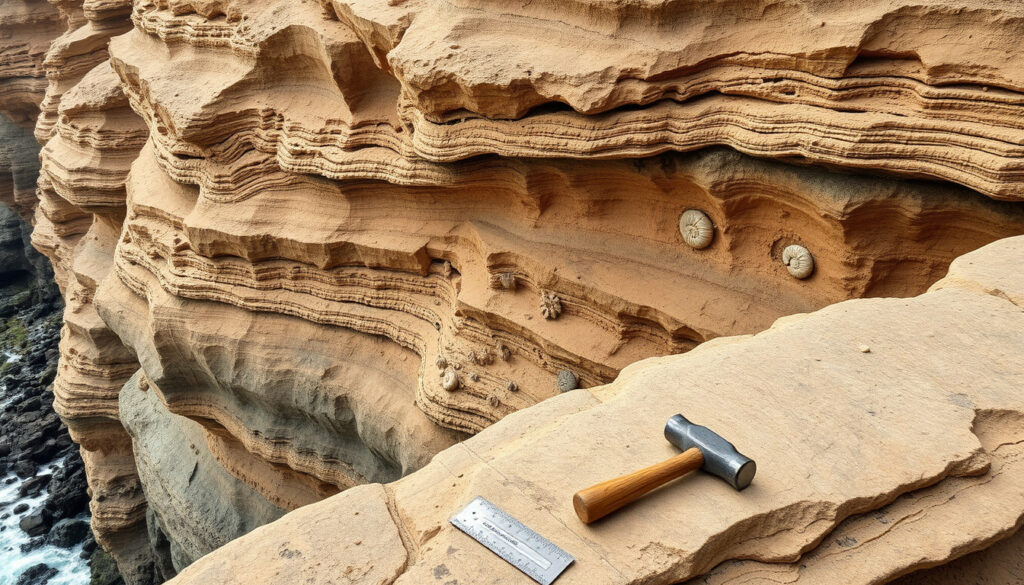
She used hammers, chisels, and pickaxes to extract fossils from the cliffs. She also employed careful brushing and soaking techniques to clean the specimens.
Is Mary Anning in any movies or books?
Yes. She was the subject of the 2020 film Ammonite (starring Kate Winslet) and appears in many children’s books and historical biographies. Her story is also featured in museum exhibits worldwide.
Why is Mary Anning considered a pioneer for women in science?
Because she achieved extraordinary scientific work in a field dominated by men, without formal education or institutional support. Her success challenged Victorian gender norms and inspires women in STEM today.
More related posts
 Olivia Bowen: Love Island, Husband Alex, Children, Net Worth
 Harley Quinn: Origin, Story, and Character Profile
 Bradley Wiggins: Knighthood to Bankruptcy & Recovery
 Dakota Johnson 2025: Relationship Status, Biography, Latest News
 Midland Metropolitan University Hospital – Location, Services and Key Facts
 Ayo Edebiri: Ethnicity, Irish Joke, Dating History & More
 Clare Holman: Biography, Roles in Morse & Lewis, Age, and Career
 James Haskell: The Truth About His Split, Health & Debt
