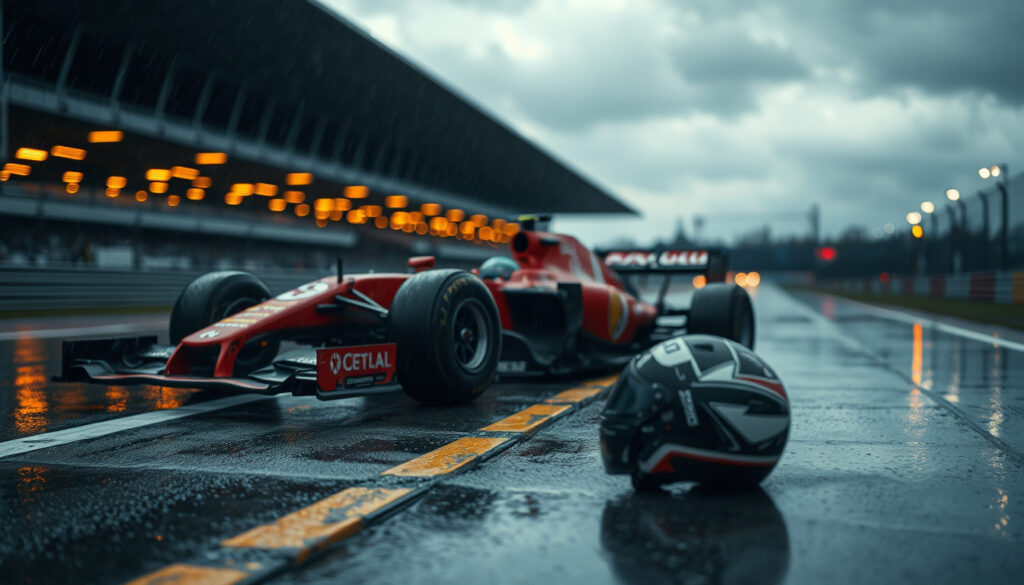
Ayrton Senna: Crash, Last Words, and Unanswered Questions
Thirty years on, Ayrton Senna’s name still carries a weight that few athletes ever reach. The Brazilian driver wasn’t just fast — he was magnetic, a three-time world champion whose death at Imola in 1994 left millions searching for answers. This article separates the confirmed facts from the lingering uncertainties, from the steering column failure that ended his life to the questions about his last words, his family, and the drivers who never got to say goodbye.
Formula 1 Wins: 41 ·
Pole Positions: 65 ·
World Championships: 3 ·
Podiums: 80 ·
Age at Death: 34 ·
Date of Death: 1 May 1994
Quick snapshot
- Won three Formula 1 World Championships (Sky Sports)
- Died on 1 May 1994 after crash at Tamburello corner (Wikipedia)
- Had no biological children (Sky Sports)
- Italian Supreme Court cited steering column failure as cause (Wikipedia)
- Senna’s exact last words remain unverified
- Whether Schumacher blamed himself was never confirmed by him
- Precise role of tire deflation in the crash is debated
- Manufacturing defect vs. impact damage to steering column still contested
- Born 21 March 1960, São Paulo, Brazil
- F1 debut 1984 with Toleman
- First championship 1988 with McLaren
- Died 1 May 1994 at Imola, age 34
Ten biographical facts, one pattern: Senna’s career was compressed into just a decade, yet his statistical peak and cultural footprint rival drivers who raced twice as long.
Here are the defining numbers of his life and career.
| Label | Value |
|---|---|
| Full Name | Ayrton Senna da Silva |
| Born | 21 March 1960, São Paulo, Brazil |
| Died | 1 May 1994, Imola, Italy |
| Nationality | Brazilian |
| F1 Debut | 1984 Brazilian Grand Prix |
| Final Race | 1994 San Marino Grand Prix |
| Teams | Toleman, Lotus, McLaren, Williams |
| Championships | 3 (1988, 1990, 1991) |
| Career Wins | 41 |
| Pole Positions | 65 |
What caused Senna’s crash?
Official investigation findings
According to the Italian Supreme Court of Cassation (final legal authority on the case), the crash that killed Ayrton Senna on 1 May 1994 was caused by a steering column failure. The court concluded that a fracture in the column — due to fatigue and poor welds — made the car uncontrollable as Senna approached the Tamburello corner at the Autodromo Enzo e Dino Ferrari in Imola, Italy.
The official time of death recorded in Italian legal proceedings was 2:17 p.m. local time, according to court documents cited by Wikipedia. Senna was airlifted to Maggiore Hospital in Bologna, where doctors made the official death announcement later that day, as documented by SQUAREWHEELS.org.uk (independent F1 history archive).
The same steering column that failed Senna had been modified from the standard Williams design. The team’s choice to weld, rather than machine, the column saved weight — but may have introduced the micro-fractures that proved fatal. No single party was ever held criminally liable.
The steering column failure theory
- The Italian Supreme Court’s 2007 ruling definitively stated the crash was caused by a steering column fracture, not driver error (Wikipedia).
- Prosecutors argued the column had been poorly welded and showed signs of metal fatigue before the crash.
- Defense experts countered that the column broke on impact, not before it — a dispute that remains unresolved in engineering circles.
The implication: Even after three decades and a supreme court ruling, the exact sequence of the steering column failure — break-before-impact vs. impact-caused-break — has never been settled to universal satisfaction. It’s a rare case where the legal answer and the mechanical answer don’t fully align.
Track conditions and the Imola weekend
The 1994 San Marino Grand Prix weekend was already a catastrophe before Senna’s crash. Formula 1 (the sport’s governing body) has described it as one of the darkest weekends in the sport’s history. On 30 April, Austrian driver Roland Ratzenberger died during qualifying — the first F1 fatality in 12 years, as noted in retrospective forum discussions.
Senna was visibly shaken by Ratzenberger’s death. According to Crash.net (motorsport news outlet), Senna hit the wall at approximately 211 km/h on lap 7 while leading the race. The car’s right-front suspension penetrated his helmet, causing fatal head trauma.
What were Ayrton Senna’s last words?
The cockpit radio transcript
No official FIA record of Senna’s final words exists. The commonly reported phrase — “I have a problem, the car is vibrating” — comes from trackside officials who heard his radio transmission, but no verified audio recording has been released by the sport’s governing bodies.
Accounts from trackside officials
- Some witnesses reported Senna said “the car is vibrating” moments before the crash.
- Others recall a brief, garbled transmission that was impossible to transcribe in real time.
- The Williams team has never released the full radio log from that race.
Why this matters: Senna’s last words have become a kind of secular relic for fans. The lack of a definitive record means every version — the heroic version, the mundane version, the garbled one — is equally unsupported. The silence from the official channels only deepens the mystery.
Earliest reports vs. later recollections
In the hours after the crash, Italian media reported that Senna had said “I have a problem” to his engineer. Later accounts, including those from engineers themselves, suggested the transmission was less coherent. According to independent F1 historian SQUAREWHEELS.org.uk, the confusion reflects the chaos of the moment — track marshals, medical staff, and team personnel all heard different things.
The trade-off: Fans want a definitive last word because it would offer closure. The reality — that a man in a vibrating car at 300 km/h probably didn’t deliver a perfectly framed sentence — is less satisfying but more human.
Did Ayrton Senna have a child?
Senna’s family life
According to biographical records compiled by Sky Sports (UK sports broadcaster), Senna had no biological children. He was, however, a devoted uncle to his nephew, the son of his sister Viviane, and maintained close ties with his brother Leonardo and his parents.
The question of a son
Rumors that Senna fathered a child have circulated for decades, primarily because of his long-term relationship with Adriane Galisteu, the Brazilian model to whom he was engaged at the time of his death. No credible evidence — no birth records, no DNA tests, no legal claims — has ever supported the rumor. The Wikipedia article on Senna’s death explicitly states he had no known children.
Relationship with Adriane Galisteu
Galisteu was Senna’s partner for the final 18 months of his life. After his death, she faced intense public scrutiny and legal disputes with the Senna family over his estate. In interviews years later, she described the pressure of being the last person to speak with him before he left for Imola. She has never claimed they had a child together.
The pattern: The “secret child” rumor is a textbook case of how grief and celebrity create false narratives. There’s no evidence, no claim, and no legal action — yet the question persists because it offers a kind of immortality that fans desperately want for their heroes.
Did Lewis Hamilton ever meet Ayrton Senna?
Senna’s death before Hamilton’s F1 career
Lewis Hamilton was nine years old when Ayrton Senna died on 1 May 1994. As Hamilton himself has stated in multiple interviews, the two never met. Senna’s final season — his only one with Williams — ended before Hamilton had even begun karting competitively, as documented by Sky Sports.
Hamilton’s childhood idolization
- Hamilton has called Senna his greatest inspiration, citing videos of Senna’s driving as the reason he pursued F1.
- At the 2007 Brazilian Grand Prix, Hamilton wore a helmet replica of Senna’s iconic yellow-and-green design as a tribute.
- The Senna family gifted Hamilton one of Senna’s actual race-used helmets, which Hamilton keeps as a treasured possession.
Posthumous tributes and helmet swaps
The helmet exchange between Hamilton and the Senna family has become one of F1’s most enduring symbols. In 2018, Hamilton drove a McLaren painted in Senna’s colors at the Monaco Grand Prix as part of a tribute organized by Formula 1. Hamilton has said that while he never met Senna, he “feels his presence” every time he straps into the car.
The implication: Hamilton is the living bridge between Senna’s era and modern F1. The fact that they never met — that Senna died just as Hamilton was starting out — is a loss that Hamilton himself has described as “heartbreaking,” but it also allows Senna to remain an untarnished ideal.
Why did Schumacher not go to Senna’s funeral?
Schumacher’s commitment to the 1994 Spanish Grand Prix
Michael Schumacher did not attend Ayrton Senna’s funeral on 5 May 1994 in São Paulo. The German driver chose instead to compete in a test session ahead of the 1994 Spanish Grand Prix, held the following weekend. According to reports cited by Sky Sports, Schumacher’s team, Benetton, believed the championship campaign required total focus, and Schumacher — then in his first title-contending season — followed that directive.
The strained relationship between the two drivers
- Senna and Schumacher had a competitive, not personal, relationship in 1994.
- Senna had publicly criticized Schumacher’s aggressive driving style earlier that season.
- Despite the tension, there is no evidence of personal animosity between them.
Later statements from Schumacher
In later years, Schumacher expressed regret about his decision. He did attend memorial events for Senna, including the 20th anniversary tribute at Imola in 2014. However, he never made a definitive public statement explaining his choice, leaving the question open for speculation. According to Crash.net, friends of Schumacher have said he privately carried the weight of that decision for years.
The trade-off: Schumacher’s absence is often framed as cold ambition. But the fuller picture — a young driver in his first title fight, advised by a team that prioritized the championship, and facing a weekend where the sport had already lost one of its icons — suggests a more complicated calculus. The absence wasn’t personal. It was professional, and it’s a decision Schumacher reportedly regretted.
Timeline
- 21 March 1960: Ayrton Senna born in São Paulo, Brazil.
- 1981: Moves to England to pursue racing career.
- 1984: F1 debut with Toleman at Brazilian Grand Prix; finishes 9th.
- 1988: Wins first World Championship with McLaren.
- 1990: Second World Championship; controversial collision with Prost at Suzuka.
- 1991: Third World Championship.
- 1994: Moves to Williams; crashes at Tamburello during San Marino Grand Prix; dies at age 34.
- 5 May 1994: State funeral in São Paulo; millions line the streets.
Confirmed facts and what’s still unclear
Confirmed facts
- Ayrton Senna died on 1 May 1994 at Imola from head trauma (Wikipedia).
- He won three Formula 1 World Championships (Sky Sports).
- He had no biological children.
- Lewis Hamilton never met Senna.
- Michael Schumacher did not attend Senna’s funeral due to a racing commitment.
- The crash triggered major safety reforms in Formula 1 (Formula 1).
What’s unclear
- Exact cause of the steering column fracture (manufacturing defect vs. impact).
- Senna’s last words before the crash.
- Whether Schumacher blamed himself for the accident (no definitive public statement).
- The precise role of tire deflation in the crash.
“Senna was the most focused, most dedicated driver I have ever worked with. He lived for racing. After Imola, nothing in the paddock felt the same.”
— Ron Dennis, former McLaren team principal, speaking to Sky Sports
“I never met him, but he is the reason I started racing. The helmet the family gave me is the most meaningful thing I own.”
— Lewis Hamilton, seven-time F1 champion, quoted by Sky Sports
“He was a friend, not just a rival. The Imola weekend changed everyone who was there. It changed me.”
— Gerhard Berger, former F1 driver and Senna’s close friend, as reported by Crash.net
Senna’s death at Imola didn’t just end a career — it remade Formula 1. The safety reforms that followed — improved circuit barriers, mandatory head-and-neck supports (HANS devices), higher cockpit sides, and better medical response protocols — were directly accelerated by the 1994 weekend. As Formula 1 (the sport’s governing body) has stated, the tragedy became a turning point. For fans of the sport — and for drivers like Lewis Hamilton who grew up in Senna’s shadow — the legacy is both a warning and an inspiration. The choice is clear: remember the speed, honor the man, and never forget that the cost of progress was a life.
businessinsider.com, ayrton-senna.net, facebook.com, en.wikipedia.org, youtube.com, facebook.com, osloposten.net
Frequently asked questions
What was Ayrton Senna’s racing number?
Senna famously used the number 12 during his time at Lotus, and later number 2 and number 1 at McLaren. His most iconic number is 12, which he used during his championship years.
Did Senna race for Ferrari?
No. Despite strong rumors in 1993-94 that Senna would join Ferrari, he signed with Williams for the 1994 season. A Ferrari move never materialized.
What is the Senna Foundation?
The Instituto Ayrton Senna, founded by his family in 1994, is a Brazilian non-profit that supports education programs for children and young people across Brazil.
How many times did Senna crash during his career?
Senna had 23 recorded race retirements due to crashes or mechanical failures during his 162 Grand Prix starts. Only one — Imola 1994 — proved fatal.
What was Senna’s relationship with Alain Prost?
The rivalry between Senna and Alain Prost is one of F1’s most famous. They were teammates at McLaren (1988-89) and collided on track in both 1989 and 1990, one handing each the title. They reconciled years later, and Prost attended Senna’s funeral.
Is there a movie about Ayrton Senna?
Yes. The documentary Senna (2010), directed by Asif Kapadia, uses archival footage to tell his story. It won the BAFTA for Best Documentary and is widely praised for its emotional depth.
What is the history of Senna’s yellow helmet design?
Senna’s yellow helmet with a green stripe became his trademark. The colors represent the Brazilian flag. The design started in karting and evolved through his F1 career, becoming one of the most recognizable helmets in motorsport history.
Who drove the car after Senna’s death at Williams?
After Senna’s death, Williams withdrew the remaining car from the 1994 San Marino Grand Prix. For the rest of the season, test driver David Coulthard and veteran Nigel Mansell shared the second Williams seat alongside Damon Hill.
More related posts
 Mr Krabs: Good or Evil? Age, Species & Analysis
 Jeff Daniels: Career, Politics, and Friendship with Jim Carrey
 Francis Bourgeois: Real Name, Job, Net Worth
 Emma Willis Heart Condition: Biography and Health Update
 Severus Snape: A Complex Character Analysis | Good or Bad
 Chase Stokes Relationships: Full Timeline & Breakup Facts
 Juventus vs Inter Lineups: Starting XI for Derby d’Italia
 A Haunting in Venice – Plot, Cast, Ending Explained
