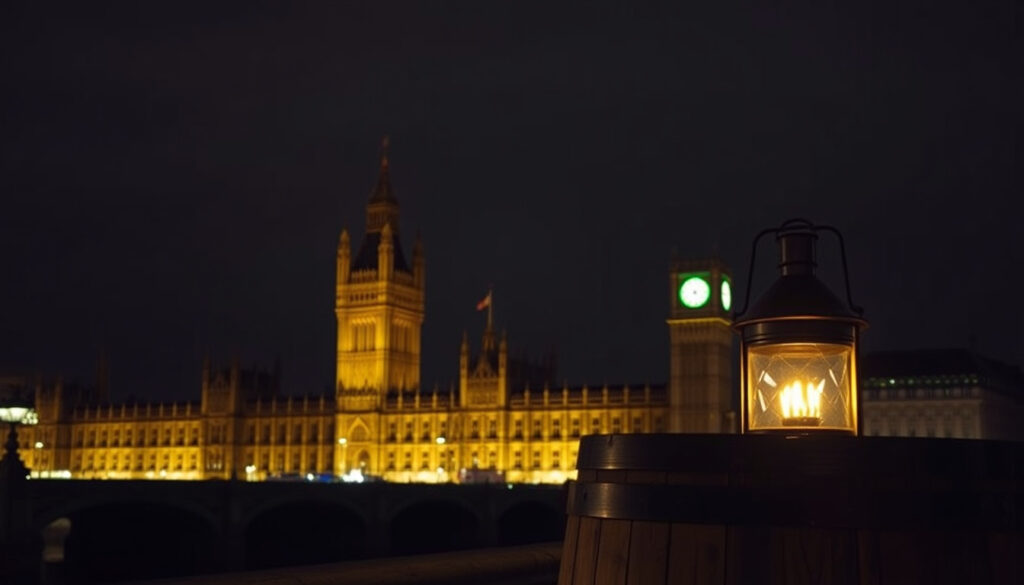
Guy Fawkes: The Gunpowder Plot, Death, and Legacy
Few historical figures have undergone a transformation quite like Guy Fawkes. Born in York in 1570, he was executed in 1606 for his role in the Gunpowder Plot, a failed attempt to blow up King James I and Parliament. This article traces the real story behind the plot, his death, and how a 17th-century conspirator became a modern icon of rebellion.
Born: 13 April 1570 ·
Died: 31 January 1606 ·
Plot date: 5 November 1605 ·
Method of execution: Hanging, drawing and quartering ·
Symbol: Guy Fawkes mask
Quick snapshot
- Arrested in the cellar of Parliament on 5 November 1605 (The National Archives (UK government archives))
- Executed by hanging, drawing and quartering on 31 January 1606 (Britannica (encyclopedia))
- The conspirators aimed to kill King James I and replace him with a Catholic ruler (UK Parliament (official legislative body))
- Exact wording of his last words; multiple conflicting accounts exist (Britannica (encyclopedia))
- Whether he was tortured before execution; official records are inconsistent (The National Archives (UK government archives))
- May 1604: Recruitment into the plot (UK Parliament)
- 5 November 1605: Discovery and arrest (The National Archives)
- 31 January 1606: Execution (Britannica)
- Bonfire Night continues annually on 5 November (London Museum (city history museum))
- Guy Fawkes mask remains a global protest symbol (Britannica)
Five key facts about Guy Fawkes, one pattern: his life pivoted on a single, failed act that redefined his legacy.
Here is a quick-reference snapshot of his biography:
| Attribute | Value |
|---|---|
| Full Name | Guy Fawkes (also Guido Fawkes) |
| Born | 13 April 1570, York, England |
| Died | 31 January 1606, London, England |
| Known For | Key participant in the Gunpowder Plot of 1605 |
| Role | Guardian of the explosives and responsible for igniting the gunpowder |
What Did Guy Fawkes Do and Why?
Who were the other conspirators?
- The plot was led by Robert Catesby, a Catholic gentleman (Britannica (encyclopedia))
- Thirteen conspirators in total, including Thomas Percy and Thomas Winter (UK Parliament (official legislative body))
Catesby recruited Fawkes in May 1604 because of his military experience with explosives gained serving in the Spanish army in the Low Countries (Britannica). The group rented a cellar beneath the House of Lords and stockpiled 36 barrels of gunpowder — enough to level the building (The National Archives (UK government archives)).
Why did they target Parliament?
- The State Opening of Parliament on 5 November 1605 would bring King James I and most of the political elite into one place (UK Parliament)
- The plotters were Catholics frustrated by the lack of religious toleration under James I (Britannica)
The plan was to trigger a Catholic uprising in the Midlands after the explosion (The National Archives). But the plot unraveled when an anonymous letter warned Lord Monteagle to stay away from Parliament. Robert Cecil, James I’s chief minister, ordered a search of the cellars on the night of 4–5 November, and Fawkes was discovered with the gunpowder (Historic UK (history education site)).
The plot’s failure was sealed by a tip-off that remains shrouded in mystery. The government may have known earlier and let it develop to justify anti-Catholic crackdowns — a pattern that distrusts convenient coincidences.
The implication: what began as a desperate act of Catholic resistance became the state’s most powerful propaganda tool against them.
Was Guy Fawkes Hanged or Burned?
How did Guy Fawkes die exactly?
- He was sentenced to be hanged, drawn and quartered (The National Archives)
- He avoided the full agony by jumping from the scaffold and breaking his neck before the hanging (Britannica)
On 31 January 1606, Fawkes was taken to Old Palace Yard, Westminster. Weakened by torture in the Tower of London, he mounted the scaffold. He jumped off the ladder, dying instantly from a broken neck — a small mercy that spared him from being cut down alive and disembowelled (The National Archives).
What were his last words?
- Multiple contradictory accounts exist; no single verified version (Britannica)
- One widely repeated account reports he said: “You think you have won, but the fight is not over” (Historic UK)
According to British Parliament records, when interrogated about the gunpowder, Fawkes reportedly told his captors he intended “to blow you Scotch beggars back to your own native mountains” (UK Parliament). The exact words he spoke at the scaffold remain uncertain, but the defiance is consistent across accounts.
Fawkes’s quick death denied the state its full spectacle of punishment. In a way, he cheated the system — a final act of control that history would later romanticize.
The trade-off: his broken neck gave him a cleaner death than the state intended, but it also stripped the execution of its deterrent power.
Was Guy Fawkes Irish?
Where was Guy Fawkes born?
- Born in York, England, on 13 April 1570 (London Museum (city history museum))
- His father was a Protestant; his mother later married into a Catholic family (Britannica)
Fawkes served in the Spanish army in the Low Countries under the name Guido Fawkes, which led to confusion about his nationality (Historic UK). He was thoroughly English, born and raised in York, but his Catholic faith and continental service made him a suspicious figure to Protestant authorities.
Are there any living descendants?
- No documented direct descendants of Guy Fawkes are known to exist today (Britannica)
- His family line appears to have died out in the 17th century (London Museum)
The misconception that Fawkes was Irish persists partly because of his Catholic allegiance and his Spanish military service, but also because the name “Guy” is associated with the effigy burned on Bonfire Night — a tradition that has no link to Irish heritage.
The pattern: a man’s nationality becomes elastic when his story is retold by different sides of a religious divide.
Why Is Guy Fawkes Considered a Hero?
Why don’t Catholics like Guy Fawkes?
- Many Catholics at the time opposed the plot because it risked worsening persecution (Britannica)
- The Pope had called for non-violence, making the plot a direct challenge to papal authority (UK Parliament)
For centuries, the official narrative painted Fawkes as a traitor. But as political and religious tensions faded, a counter-narrative emerged: Fawkes as a man who stood up against government oppression. King James I himself reportedly remarked that if Fawkes had succeeded, he would be remembered as a great hero (Britannica).
How did the mask become a protest symbol?
- The Guy Fawkes mask gained popularity after the 2005 film ‘V for Vendetta’ (Britannica)
- It was adopted by protest movements like Anonymous and Occupy Wall Street (London Museum)
The mask transforms Fawkes from a historical figure into a blank canvas for dissent. Today, it appears at protests worldwide — from anti-government rallies in Hong Kong to climate marches in Europe — a symbol that the original Gunpowder Plot would never have imagined.
The mask’s commercialization risks diluting its meaning. When a symbol of rebellion is sold in every costume shop, its power to challenge authority may fade into fashion.
Why this matters: the same image that once represented Catholic terrorism now stands for individual resistance against state overreach — a complete inversion of meaning.
How Did Guy Fawkes Become a Symbol of Modern Protest?
What is the significance of the Guy Fawkes mask?
- It represents defiance against authoritarianism (Britannica)
- The mask hides identity and creates a unified visual for decentralized movements (London Museum)
The 2005 film ‘V for Vendetta’ explicitly linked the mask to a fight against a fascist regime. Real-world activist groups — most notably Anonymous — adopted it as a digital and physical uniform. The mask has been used in the Arab Spring, the Hong Kong protests, and anti-establishment rallies across Europe and the Americas.
How is Bonfire Night celebrated today?
- Bonfire Night (5 November) is celebrated in the UK with fireworks, bonfires, and burning effigies of Guy Fawkes (London Museum)
- The term ‘Guy’ originally referred to an effigy of Fawkes, and later came to mean any man in English slang (Britannica)
What began as a state-mandated day of thanksgiving for the deliverance of King James I has evolved into a secular night of fireworks and community gatherings. The tradition of burning an effigy — a “guy” — persists, though many participants have little knowledge of the historical events behind it.
The catch: the celebration now commemorates the failure of the plot, but the mask has become a symbol for those who wish they had succeeded.
Timeline of the Gunpowder Plot
- 13 April 1570 – Guy Fawkes born in York, England (London Museum)
- 1591–1604 – Fawkes serves in the Spanish army in the Low Countries (Britannica)
- May 1604 – Robert Catesby recruits Fawkes into the Gunpowder Plot (UK Parliament)
- 5 November 1605 – Fawkes discovered in the cellar beneath the House of Lords with gunpowder and arrested (The National Archives)
- 27 January 1606 – Trial of the conspirators; all found guilty (The National Archives)
- 31 January 1606 – Fawkes executed in Old Palace Yard, Westminster (Britannica)
- 5 November 1606 onwards – Bonfire Night established as a day of thanksgiving (London Museum)
- 2005 – Film ‘V for Vendetta’ popularizes the Guy Fawkes mask as a symbol of rebellion (Britannica)
Confirmed facts
- Guy Fawkes was arrested in the cellar of Parliament on 5 November 1605 (The National Archives)
- He was executed by hanging, drawing and quartering on 31 January 1606 (Britannica)
- The conspirators’ goal was to kill King James I and replace him with a Catholic ruler (UK Parliament)
What’s unclear
- The exact wording of his last words; multiple conflicting accounts exist (Britannica)
- Whether he was tortured before his execution; official records are inconsistent (The National Archives)
- The degree to which he acted out of personal conviction versus being a pawn of more powerful conspirators (Historic UK)
Quotes from the Historical Record
“To blow you Scotch beggars back to your own native mountains.”
— Guy Fawkes, under interrogation, as recorded in British Parliament records (UK Parliament)
“If he had succeeded, he would have been remembered as a great hero.”
— King James I, as reported in various historical accounts (Britannica)
The legacy of Guy Fawkes is a study in contradiction. For modern protest movements, the choice is clear: embrace the mask as a symbol of defiance against power, or let it become a hollow costume stripped of its historical weight. The fight over his memory — whether traitor or icon — will continue as long as people question authority.
Related reading: **Henry VIII: His Wives, Death, and Legacy – Full Biography**
en.wikipedia.org, en.wikipedia.org, famous-trials.com, ichistory.com, britannica.com, roperywalk.org.uk, youtube.com, trollhattannytt.se
Frequently asked questions
What is Bonfire Night?
Bonfire Night, also known as Guy Fawkes Night, is celebrated on 5 November in the UK with fireworks, bonfires, and burning effigies to commemorate the failure of the Gunpowder Plot (London Museum).
Who were the other Gunpowder Plot conspirators?
The plot was led by Robert Catesby and included Thomas Percy, Thomas Winter, John Wright, and others — 13 men in total (Britannica).
Did Guy Fawkes have a family?
He was not married and had no known children. His family line appears to have died out in the 17th century (London Museum).
Why do people burn effigies of Guy Fawkes?
The tradition began as a way to express loyalty to the Crown and contempt for the conspirator. Over time it became a central part of Bonfire Night celebrations (Historic UK).
Is Guy Fawkes Day a public holiday?
No, it is not a public holiday in the UK. It is a traditional celebration observed with evening events (UK Parliament).
What does the Guy Fawkes mask symbolize?
It symbolizes resistance against authoritarianism and has been adopted by Anonymous, Occupy, and other protest movements (Britannica).
Did the Gunpowder Plot succeed?
No. The plot was discovered on the night of 4–5 November 1605, before it could be carried out (The National Archives).
How long did it take to plan the Gunpowder Plot?
Planning began in May 1604 and continued for about 18 months until the discovery in November 1605 (UK Parliament).
More related posts
 Sophie Rundle: Ada Thorne and Her Private Life
 Shannon Matthews Kidnapping: Facts, Siblings, and Aftermath
 Paddy Pimblett: Record, Next Fight, Net Worth & More
 Mobile Mechanic Near Me: Costs, Drawbacks & How to Choose
 Heston Blumenthal: Bipolar Diagnosis & Restaurant Closures
 Henry VIII: His Wives, Death, and Legacy – Full Biography
 Tom Burke’s personal life: marriage, disability, and health facts
 Jimmy Choo Guide: History, Heel Prices, Perfume, CEO & More
