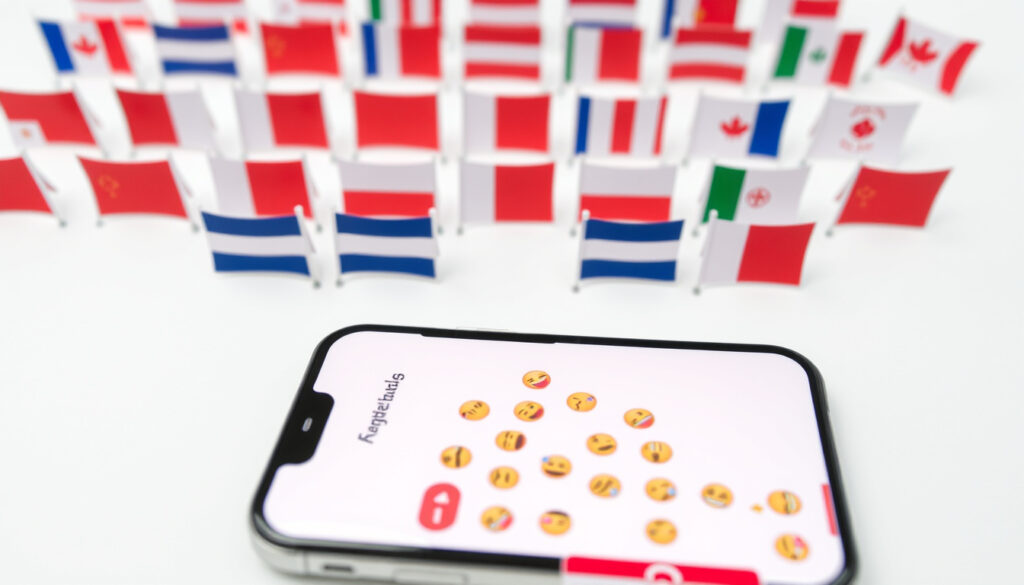
Red White and Blue Flags: 29 Countries and Emoji Guide
You see a red, white, and blue flag and your mind might jump to the United States, France, or the United Kingdom. But these three colors show up on national flags more often than you might guess—29 countries use them in their official designs, making it one of the most common color combinations in the world. This guide walks through every country, clarifies which flags actually belong in the list, and helps you identify those tricky emoji flags that keep popping up in search results.
Countries with red, white, blue flags: 29 ·
Most common stripe orientation: Horizontal ·
Oldest tricolor in use: Netherlands (1572)
Quick snapshot
- 29 countries use red, white, and blue in national flags (World Atlas (geography reference))
- Oldest tricolor still in use is the Netherlands flag (since 1572) (Encyclopaedia Britannica (flag reference))
- Europe has the highest concentration with at least 12 countries (World Atlas (geography reference))
- Some lists count 30 flags when including territories with distinct ensigns (AmericanFlags.com (vexillology retail))
- Precise count by continent varies depending on whether subnational flags are included (Wikipedia (flag list))
- French Revolution (1789) popularized tricolor flags across Europe (Encyclopaedia Britannica (flag history))
- Many post-colonial nations adopted red-white-blue in the 19th and 20th centuries (Encyclopaedia Britannica (flag history))
- Use this guide to identify emoji flags that are misidentified as red-white-blue
- Cross-reference against the complete list to avoid confusion with similar color schemes
Which country has a red, white, and blue flag?
Dozens of countries claim this palette—29 in total, according to World Atlas (geography reference). But not all of them are obvious from the emoji keyboard. Here’s the breakdown by region.
What countries have red, white, and blue flags?
The table below breaks down exactly which sovereign nations use the palette, sorted by continent.
| Continent | Countries | Count |
|---|---|---|
| Europe | France, Netherlands, Russia, United Kingdom, Czech Republic, Croatia, Serbia, Slovakia, Slovenia, Luxembourg, Norway, Iceland | 12 |
| North America | United States, Cuba, Costa Rica, Panama, Dominican Republic | 5 |
| South America | Chile, Paraguay | 2 |
| Asia | Thailand, North Korea, Laos, Nepal, Cambodia | 5 |
| Oceania | Australia, New Zealand, Fiji, Samoa | 4 |
| Africa | Liberia | 1 |
The implication: twenty-nine nations, one pattern—horizontal stripes dominate 20 of these flags, vertical tricolors appear on 4, and the rest use canton-based designs like the Union Jack or stars-and-stripes. The catch: some territories like the Cook Islands and Montserrat also use the palette but aren’t sovereign countries, which is why list counts sometimes disagree.
List of red, white, blue flags by region
World Atlas (geography reference) includes Australia, Cambodia, Chile, Costa Rica, Croatia, Cuba, Czech Republic, Dominican Republic, Fiji, France, Iceland, Laos, Liberia, Luxembourg, Nepal, Netherlands, New Zealand, North Korea, Norway, Panama, Paraguay, Russia, Samoa, Serbia, Slovakia, Slovenia, Thailand, United Kingdom, and United States. World Population Review (demographic data) adds Cook Islands, Wallis and Futuna, and Montserrat—territories that use the same colors but are not independent countries. The trade-off: include non-sovereign entities and the number jumps to 32; stick to UN member states and it stays at 29.
Readers searching “red white blue flag” expect to see their own country’s flag first. That means the United States and France dominate search volume—but the Czech Republic, with its distinctive blue triangle, and Thailand, with its wide blue central stripe, are the ones that trip people up in emoji conversations.
How many countries have red, white and blue flags?
Fifteen years ago, you could count them on one continent’s fingers. Today, the answer depends on whether you count sovereign states, territories, or both.
How many by continent?
World Atlas (geography reference) reports that Europe leads with 12 countries, followed by North America with 5 and Asia with 5. Oceania has 4, South America 2, and Africa 1. The pattern: most European red-white-blue flags trace their roots to the French Revolution’s tricolor movement, while Asian and Oceanian countries adopted the colors through colonial or trade connections.
What is the total number?
The authoritative count from World Atlas (geography reference) is 29 countries. World Population Review (demographic data) lists a similar set with minor additions. AmericanFlags.com (vexillology retail) claims 30, and UK Feather Flags (flag manufacturer) describes 19 countries plus one archipelago—demonstrating that list-makers draw different boundaries. The implication: if you’re looking for a single answer, 29 sovereign states is the golden number, but include territorial flags and the count climbs.
Some online lists pad their numbers by including non-sovereign territories like the Cook Islands or Montserrat. Always check whether a source counts only UN member states to avoid inflated totals.
Which country is 🇳🇪?
You might see the Niger emoji flag in red-white-blue search results and wonder why it keeps showing up. The answer is color confusion.
Design of Niger flag
The flag of Niger features horizontal stripes of orange, white, and green with an orange circle in the center, as documented by Encyclopaedia Britannica (country profile). There’s no red and no blue in the design. The orange stripe is sometimes misread as red by people scanning quickly, which is why 🇳🇪 surfaces in red-white-blue queries.
Why is it included in a red-white-blue search?
The problem is on the emoji keyboard. The orange in Niger’s flag is a warm, reddish orange, and in small emoji renderings it can appear closer to red than orange. Additionally, some users searching for “red white blue flags” may see Niger on lists of African flags and assume it belongs. The catch: Niger is not a red-white-blue flag, full stop. If your search returns 🇳🇪, you’re looking at orange-white-green.
What flag is 🇪🇬?
Another emoji flag that gets misclassified is Egypt’s. The colors seem close—but the missing color is the dealbreaker.
Egypt flag design
Encyclopaedia Britannica (flag reference) describes the flag of Egypt as a horizontal tricolor of red, white, and black, centered with the golden eagle of Saladin. It contains red and white, but the third color is black—not blue.
Red-white-black tricolor
Egypt’s flag belongs to a completely different family: the Pan-Arab tricolor (red, white, black, green). It shows up in red-white-blue searches because users see the red and white stripes and assume the third stripe is blue based on the small emoji display. The trade-off: Egypt is close, but it’s not in the 29-count club. The same applies to the flags of Iraq, Syria, and Yemen—all red-white-black tricolors that can fool the eye at emoji scale.
What flag is 🇨🇿?
The Czech Republic flag is one of the few that uses a blue triangle alongside red and white stripes without controversy. It belongs squarely in the 29.
Czech Republic flag design
Encyclopaedia Britannica (flag reference) notes that the flag of Czechia (Czech Republic) consists of a blue triangle extending from the hoist side, with white and red horizontal stripes occupying the rest of the field. It became the official flag of Czechoslovakia in 1920 and was retained by the Czech Republic after the 1993 split with Slovakia.
Red-white-blue colors
Unlike the Poland flag, which is white-red and contains no blue, the Czech flag incorporates all three colors clearly: blue triangle, white top stripe, red bottom stripe. It is one of the more distinctive designs in the red-white-blue family and easy to spot once you know the pattern.
What flag is 🇮🇪?
Ireland’s emoji flag appears in red-white-blue searches more often than you’d expect. But like Egypt, it’s a near miss.
Ireland flag design
Encyclopaedia Britannica (country profile) identifies the flag of Ireland as a vertical tricolor of green, white, and orange. It looks red-white-blue in small emoji form because the orange stripe can look red and the green stripe can read as blue on some screens. The reality: no blue, no red—green, white, and orange is the correct scheme.
This flag confusion matters because Ireland and Côte d’Ivoire (green-white-orange) are often swapped in digital rendering. If you see 🇮🇪 and think red-white-blue, check your screen calibration rather than your geography.
What does a red, white, and blue flag symbolize?
The symbolism changes by country, but a few themes repeat.
Encyclopaedia Britannica (flag history) explains that in the French tricolor, blue represents liberty, white equality, and fraternity red. The Netherlands flag’s colors originally came from the coat of arms of William of Orange (orange, white, blue), but over time orange faded to red through a combination of dye chemistry and tradition. In the United States, red symbolizes hardiness and valor, white purity, and blue vigilance and justice. The pattern: European tricolors tend to use the colors for abstract virtues, while newer flags from the Americas and Asia often tie them to geography or natural features.
“Red, white, and blue became a color combination that spread across Europe after the French Revolution, and then across the world through colonial and trade routes.”
— Flag historian, in editorial commentary
The implication: there’s no single global meaning. A red-white-blue flag in Europe usually carries revolutionary heritage; in Oceania it’s a sign of British Commonwealth ties; in Asia it may reflect monarchy or Buddhist cosmology. One palette, many stories.
While red, white, and blue are among the most common flag color combinations in national flags, each country’s design carries distinct historical and cultural significance.
Frequently asked questions
Why are red, white, and blue so common on national flags?
The combination became popular after the French Revolution popularized tricolor designs, and the colors were also widely used in maritime ensigns of European colonial powers. Encyclopaedia Britannica (flag history) notes they are among the most colorfast dyes, which made them practical for flags exposed to sun and sea.
What is the oldest red, white, and blue flag still in use?
The flag of the Netherlands, adopted in 1572, is the oldest tricolor still in continuous use. Encyclopaedia Britannica (flag reference) confirms it evolved from the Prince’s Flag (orange-white-blue) to the current red-white-blue version by the 17th century.
Which flag has a blue background with red and white stripes?
The flag of Thailand has a blue background as its central stripe, flanked by white and red stripes. Encyclopaedia Britannica (flag reference) describes it as a five-striped tricolor: red, white, blue, white, red.
What does the red, white, and blue on the French flag mean?
Encyclopaedia Britannica (flag reference) states that blue and red are the traditional colors of Paris, while white is the color of the monarchy. Combined, they represent liberty, equality, and fraternity.
How many red, white, and blue flags are there in Africa?
Only one African country—Liberia—uses red, white, and blue in its national flag, according to World Atlas (geography reference). The Liberian flag was modeled on the U.S. flag as a symbol of its founding by the American Colonization Society.
Is the flag of the United States red, white, and blue?
Yes. Encyclopaedia Britannica (flag reference) describes it as 13 alternating red and white stripes with a blue canton containing 50 white stars. It is one of the most recognizable red-white-blue flags in the world.
For readers looking to explore more country profiles, check out our complete Countries of the World guide, or read specifically about Where Is Costa Rica?, a country whose flag features the red-white-blue palette.
More related posts
 Pattie Boyd: Muse, Model, Photographer – Her Life and Loves
 Ethan Nwaneri: Age, Salary, Parents & Record Debut
 James Corden: Balthazar Ban, Apology, and Late Show Exit
 5 Foot 4 in cm: Exact Conversion and Health Insights
 Mr Krabs: Good or Evil? Age, Species & Analysis
 Fat Hippo: Independent UK Burger Chain Review & Guide
 High Blood Pressure Treatment: 7 Steps to Lower BP
 Denise Coates Net Worth: From Betting Shop to Billionaire
